• English
  • 简体中文
  • 繁體中文
  • Tiếng Việt
  • ไทย
  • Indonesia
Subscribe
Real-time News
On June 30th, Futures News reported that oil prices rose yesterday due to a series of attacks on oil tankers near the Strait of Hormuz and the resumption of military operations between the US and Iran. Although the two sides subsequently suspended military operations, renewed market concerns directly led to a rise in oil prices. Zhuochuang Information predicts that continued attention should be paid to developments in the Middle East. If the situation does not escalate further, or even de-escalates, oil prices will likely decline. Otherwise, market volatility will persist, and oil prices will fluctuate widely at high levels. In the short term, US crude oil is expected to fluctuate weakly around $70.June 30th - According to four sources with direct knowledge of the discussions, the unexpectedly rapid decline in energy prices over the past week has further eased pressure on European Central Bank (ECB) policymakers to raise interest rates next month, but the rationale for a small rate hike remains strong. The ECB raised rates this month to prevent a surge in oil prices triggered by the Iran war from inflating market price expectations, and policymakers are currently discussing the urgency of further rate hikes. The sources stated that the speed of the oil price decline surprised them, with futures prices for several key maturities now even lower than the ECBs previously predicted "relatively mild" rate hike scenario. Previous concerns about shortages of supplies such as aviation fuel have proven unfounded, as some oil-producing countries, particularly Saudi Arabia, have exceeded expectations in energy production to ensure market supply. The sources added that even amid the escalation of the conflict between Iran and the United States over the weekend, oil prices did not react strongly, indicating that the normalization process in the energy market is progressing. Currently, a September rate hike remains the most likely scenario, but the sources pointed out that the June inflation data to be released on Wednesday is still of greater importance. If the June inflation data unexpectedly rises sharply, a July rate hike may re-emerge as a focus of discussion.The yield on Japans 5-year government bonds rose 2 basis points to 1.890%.On June 30th, the Bank of Japan (BOJ) appointed Ayano Sato, considered a supporter of loose monetary policy, as a new board member. This appointment increases the likelihood of two dissenting votes on future interest rate hike proposals. Although the nine-member board remains hawkish overall, this structural change could slow the pace of the BOJs tightening policy. The departure of the boards most steadfast hawks, Naoki Tamura and Hajime Takada, in July next year adds uncertainty to the policy tightening path. Sato is scheduled to hold a press conference at 5 PM Tokyo time (4 PM Beijing time) on Tuesday, and the market will closely watch whether she will align with Toshiro Asada and oppose further tightening. Her formal policy debut will take place at the July 30-31 meeting, where the BOJ is widely expected to maintain interest rates. The market will weigh Sanae Takaichis apparent monetary prudent stance (related to the financing costs of her government investment program) against the BOJs established position of continuing to tighten policy in response to price pressures driven by the energy shock.European Central Bank sources say that if June inflation data unexpectedly rises sharply, a July rate hike may become a focus of discussion again.

Under the international gold price, support is at $1750

Oct 26, 2021 11:02

On Wednesday (October 13), international gold prices strengthened, but the increase was modest. Investors are waiting for US inflation data and the minutes of the Fed’s September policy meeting to find clues as to when the central bank will begin withdrawing its massive stimulus measures. The price of gold remains bearish in the short-term, with support at $1750 below.

At GMT+8 13:39, spot gold rose by 0.12% to US$1762.11 per ounce; the main COMEX gold contract rose by 0.17% to US$1762.3 per ounce; the US dollar index fell by 0.16% to 94.366.


Three Fed policymakers said on Tuesday (October 12) that the economy has recovered enough for the central bank to begin withdrawing support policies during the crisis. This strengthens the Fed’s expectation that the Fed will start reducing monthly bond purchases as soon as next month. Central bank cuts in stimulus measures and interest rate hikes tend to push up government bond yields and increase the opportunity cost of holding gold.

The number of job vacancies in the United States decreased in August, but still exceeded 10 million, which is a very high level. Due to the tight labor supply, the number of voluntary resignations surged to a record high in August, hindering employment growth.

White House officials warned that during this Christmas period, Americans may face rising prices and empty shelves. Officials are currently busy alleviating the global supply bottleneck that has plagued US ports, roads and railroads.

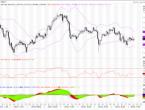
On the daily chart, the price of gold has started a three-wave downward trend from US$1,781, and the support below looks to the 38.2% target of US$1738. Wave 3 is a sub-wave of the downward (3) wave that started at $1834. (3) Lang's 61.8% target is at $1688. (3) Wave is a sub-wave of the downward ((Y)) wave that started from 1917 USD. The ((Y)) wave belongs to the adjusted IV wave that started at $2,075.

On the hourly chart, the price of gold has started a downward wave ((iii)) trend from US$1769. It is expected to fall below the 38.2% target of US$1757, and further drop the 50% target of US$1750. ((iii)) Wave is a sub-wave of Wave 3.