• English
  • 简体中文
  • 繁體中文
  • Tiếng Việt
  • ไทย
  • Indonesia
Subscribe
Real-time News
On June 18th, OCBC Group Research analysts stated in a report that the Central Bank of Indonesia and the Central Bank of the Philippines are likely to raise interest rates by 25 basis points each later on Thursday. The Federal Reserves decision to maintain interest rates likely indicates that these Southeast Asian central banks believe short-term capital flow volatility will persist, and in this context, their policy decisions will remain primarily driven by inflation and macroeconomic stability factors. OCBC noted that the expected rate hike by the Central Bank of Indonesia will be consistent with its policy objective of preventing further deterioration of market sentiment.On June 18th, Federal Reserve officials hinted on Wednesday that they may soon need to raise interest rates rather than cut them, a sharp shift in thinking against the backdrop of rapidly rising inflation. Krishna Guha, an analyst at Evercore ISI, said that the decline in energy prices could provide some relief in the coming months. However, he warned that the interest rate outlook has decoupled from oil prices, suggesting a deeper uncertainty about whether underlying inflation will cool enough that the Fed will not ultimately have to raise rates. Guha stated that in addition to energy, two other pressures remain: the continued transmission effects of tariffs and the cost spillover from the investment boom in artificial intelligence infrastructure. Claudia Sam, chief economist at New Century Advisors and a former Fed economist, said that she has not yet seen the conditions that would typically prompt the Fed to respond to supply-driven inflation—an overheated labor market or a loss of anchor in inflation expectations. But she acknowledged that the case for action is accumulating. “I can understand the view that the Fed should be prepared to intervene and raise rates if things worsen,” she said. The Fed may act faster than it did during the pandemic when inflation surged because “they are already having this debate.”According to TASS, the local mayor said that drones attacked a Moscow oil refinery.On June 18th, at the opening of the 2026 Hong Kong Auto Show, Geely Remote New Energy Commercial Vehicle and Cao Cao Mobility (02643.HK) reached a strategic cooperation agreement to jointly promote the large-scale deployment of Robovans. According to the plan, by 2030, the two companies will have deployed a total of 100,000 Geely Remote Robovan Prodigy T6 vehicles. Guided by the "One Geely" strategy, the two companies will accelerate the construction of an intelligent logistics network for the AI era through deep collaboration in the operation of new energy commercial vehicles and logistics scenarios, jointly creating a comprehensive green and intelligent transportation new energy ecosystem solution.On June 18, Li Chao, Deputy Director of the Policy Research Office and Spokesperson of the National Development and Reform Commission, stated at a press conference that achieving carbon peaking and carbon neutrality is not only an inevitable requirement for achieving high-quality development and promoting modernization in harmony with nature, but also a solemn commitment my country, as a responsible major power, has made to the international community. We will work with relevant departments and local governments to simultaneously address both existing and new carbon emissions. Regarding existing carbon emissions, we will focus on nine key industries, including steel, electrolytic aluminum, cement, flat glass, oil refining, ethylene, synthetic ammonia, methanol, and coal-fired power, implementing a three-year action plan for energy conservation and carbon reduction transformation, creating more space for new projects in high-energy-consuming and high-polluting sectors to implement carbon emission replacement at the same or reduced level. Regarding new carbon emissions, we will promote the optimization of energy structure in new projects, actively develop new models such as green direct supply, increase the proportion of non-fossil energy use, and reduce carbon emission levels. Next, we will encourage local governments to expand investment in zero-carbon industrial parks and zero-carbon transportation corridors, accelerate the realization of new clean energy power generation covering the entire societys new electricity demand, and continuously cultivate new drivers for green and low-carbon development.

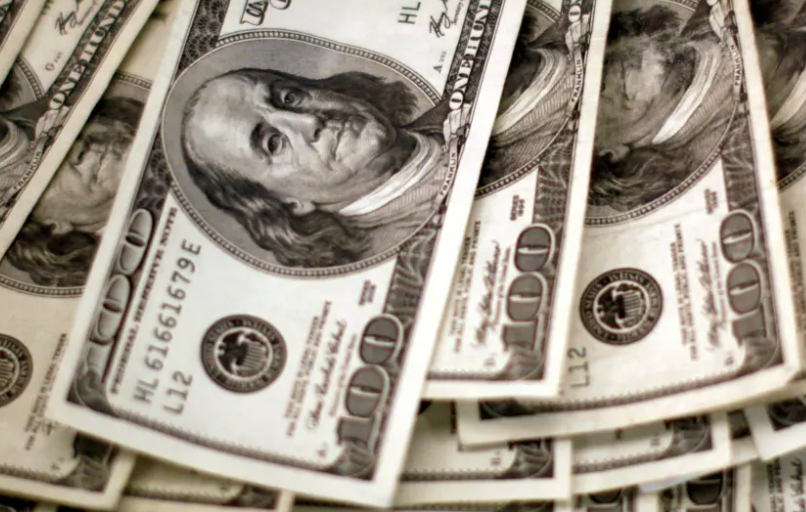
The US Dollar Index is higher at 108.00 as strong Fed talk is supported by US inflation

Daniel Rogers

Jul 14, 2022 14:35

 截屏2022-07-14 上午9.29.31.png


The US Dollar Index (DXY) increased 0.15 percent to 108.20 during Thursday's Asian session, supporting the four-day high inflation report and reversing a two-day loss. An increasing sense of pessimism about Europe and concerns about a worldwide economic slump may also be to blame for the recent surge in the dollar index.


Despite being aware of the greatest US inflation numbers in forty years, recent Fed policymakers welcomed the market's hawkish predisposition. Mary Daly, head of the Federal Reserve Bank of San Francisco, recently said that a 75bp hike in July is most likely, but a 100bp increase is still possible, according to the New York Times. Prior to that, Loretta Mester, president of the Federal Reserve Bank of Cleveland, said, "The CPI data does not indicate a smaller rate hike in July than in June," in contrast to Thomas Barkin, president of the Federal Reserve Bank of Richmond, who supported higher rates at the previous meeting.


Despite this, the US Consumer Price Index (CPI) rose by 9.1% year over year in June, as opposed to the 8.8% projected and 8.8% before. The Core CPI, which excludes volatile food and energy prices, dropped from 6% to 5.9%, exceeding the 5.8% prediction of experts. It is noteworthy that the BOC announced a 100 bps rate increase, contrary to what the market had anticipated the day before.


White House (WH) Economic Adviser Brian Deese said CNBC, as reported by Reuters, that the CPI data shows that Congress has to approve legislation to increase semiconductor manufacture in the US. In contrast, US President Joe Biden claimed that the drop in the price of gasoline had rendered the CPI statistics "out of data."


While 10-year Treasury rates dropped four basis points (bps) to 2.93 percent at the close of the Wednesday North American session, Wall Street benchmarks still ended the day in the red. Additionally, US 2-year Treasury rates increased by 3.5 percent in a single day to reach 3.15 percent, which heightened recession fears and strengthened the inversion at the 10-year barrier. As a result, as of the time of publication, S&P 500 Futures had declined by 0.60 percent.


The US Producer Price Index for June and the monthly Jobless Claims numbers will soon grace the calendar and amuse DXY traders. However, there will be a strong emphasis on Fedspeak and risk factors like conversation about the recession.