• English
  • 简体中文
  • 繁體中文
  • Tiếng Việt
  • ไทย
  • Indonesia
Subscribe
Real-time News
On April 3rd, Futures News reported that silver prices have been trending downwards and rebounding since March. As of April 2nd, the domestic spot price of #1 silver was 18,150 yuan/kg, a cumulative decrease of 25.7% compared to the beginning of March. The main driver was negative news, specifically the turmoil in the Middle East, which led the market to price in expectations of subsequent energy supply tightening, thus increasing concerns about inflation. The Federal Reserve shifted its stance from one rate cut this year to the possibility of a rate hike, putting pressure on silver. However, Powells subsequent statement suggesting maintaining interest rates and the release of some conciliatory signals between the US and Iran led to a correction in market expectations for rate cuts. Domestically, with the export tax rebate period for photovoltaic modules approaching, the downstream rush to produce and export has largely ended. Coupled with the weakness in new energy vehicles and price volatility weakening market investment demand, the fundamentals are under overall pressure. Going forward, continued attention needs to be paid to the direction of the Middle East situation and its impact on the Federal Reserves interest rate path. Silver volatility may increase, and it is recommended to invest cautiously based on ones own risk tolerance.On April 3rd, Tencent Cloud officially launched its "Lobster" memory service—TencentDB Agent Memory—adding a long-term memory layer to OpenClaw. Currently, Agent Memory is seamlessly integrated into Tencent Cloud products such as Lighthouse and ClawPro as a plugin, and can be activated for free with a single click.On April 3, Hong Leong Investment Bank, in a report, pointed out that the Malaysian economy may be under pressure due to temporary energy supply disruptions caused by the conflict with Iran, and therefore lowered its 2026 GDP growth forecast from 4.7% to 4.5%. Although Malaysian ships were recently granted free passage through the Strait of Hormuz, analysts believe that the risk of oil supply shortages cannot be completely ignored. However, strong exports of electronic products and continued consumer demand will support growth. Due to rising commodity costs and adverse weather conditions, RON97 fuel oil, unsubsidized diesel, electricity, and food are facing upward price pressure, and Hong Leong Investment Bank raised its 2026 CPI growth forecast from 1.7% to 2.0%. Given the rising inflation risks and slowing growth prospects, analysts added that the Central Bank of Malaysia is likely to maintain the policy rate at 2.75% when assessing the impact of the conflict.On April 3rd, the Wuhan Housing Provident Fund Management Center released its interpretation of the policy on optimizing the use of housing provident funds, document number Wu Gong Zhong Gui [2026] No. 2. Regarding expanding the scope of inter-city loans, the eligibility for inter-city housing provident fund loans has been expanded to include employees contributing to the fund in cities across the country, and the restriction that borrowers (including their spouses) must have Wuhan household registration has been removed. The eligibility for commercial-to-provident fund loan conversions has also been expanded to include employees contributing to the fund in cities across the country. The determination of the number of properties eligible for loans has been adjusted. From October 1, 2025 to June 30, 2027, if a contributing family sells its only home and applies for a housing provident fund loan to purchase a newly built or existing home in Wuhan, the citys first-home housing provident fund loan policy will apply; if a family sells one of its two homes and applies for a housing provident fund loan to purchase a newly built or existing home in Wuhan, the citys second-home housing provident fund loan policy will apply.April 3 - According to a CNN report on April 2, US intelligence assessments indicate that despite five weeks of US-Israeli military action against Iran, approximately half of Irans missile launchers remain intact, and it possesses thousands of suicide drones. The report, citing sources, states that the main reason Irans missile launchers have not been severely damaged is their ability to be moved underground. Furthermore, Irans use of mobile platforms for "hit-and-run" tactics makes tracking these launchers extremely difficult. Sources say that in addition to existing missile launchers, Iran still maintains a large stockpile of missiles. Moreover, the operational capability of Irans coastal cruise missiles is likely largely intact.

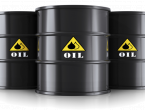
NYMEX crude oil is approaching a seven-year high again, OPEC+ accurately grasps the weakness of the United States

Oct 26, 2021 10:58

On Tuesday (October 5), international oil prices continued a new wave of gains triggered by the previous trading day. Earlier, the world’s major oil-producing countries announced their decision to maintain the current pace of increasing production. Crude oil-consuming countries feared that this would undermine the recovery from the epidemic.

GMT+8 15:45, NYMEX crude oil futures rose 0.36% to 77.91 US dollars/barrel; ICE Brent crude oil futures rose 0.55% to 81.70 US dollars/barrel. The two cities closed up 2.27% and 2.56% respectively overnight, and set a new high of US$78.38/barrel since November 10, 2014 and a new high of US$82/barrel since October 14, 2018.


The Organization of the Petroleum Exporting Countries and Russia's oil-producing allies (OPEC+) said on Monday (October 4) that they will stick to the existing agreement-increasing production by 400,000 barrels per day each month, ignoring the demands of major oil-consuming countries such as the United States and India to accelerate production. Call.

A senior aide to US President Biden discussed a series of issues during a meeting with Saudi Crown Prince Mohammed in Saudi Arabia last week, calling oil prices "worrying." India, another major oil consumer, is also struggling to demand an increase in oil supply.

Demand rebounded rapidly, and supply was disrupted by various factors, including the hurricane that severely damaged US production, and the low level of investment in the entire industry when demand fell sharply during the worst of the epidemic. Oil prices have soared by more than 50% this year, which has increased inflationary pressures.

Crude oil-consuming countries generally believe that the global economy has slowly recovered from the epidemic, and the prospects for oil demand are promising. However, sources in the oil-producing countries revealed shortly before the vote that despite the pressure to increase production, OPEC+ is concerned that the fourth wave of the global new crown epidemic may hit the demand recovery.

The organization agreed in July to increase production by 400,000 barrels per day at least until April 2022, in order to gradually end the current 5.8 million barrels per day production reduction plan. The current reduction in production has been much lower than the reduction in production during the worst period of the epidemic.

Russian Deputy Prime Minister Novak said after the meeting: "We will pay close attention to the situation. We know that demand usually declines in the fourth quarter. Our plan to increase (output) is progressing steadily. We will pay close attention to how the market will achieve it. balance."

Capital Investment Macro said: “We expect that the gradual normalization of demand growth and the rebound in supply will have an impact on oil prices from the fourth quarter. OPEC+ increases production and this dynamic will be reversed."

Avtar Sandu, Senior Commodity Manager of Phillip Futures in Singapore, said: "In the short term, the oil market may increase volatility... However, the main trend remains intact, and a deep correction will provide buying opportunities."