• English
  • 简体中文
  • 繁體中文
  • Tiếng Việt
  • ไทย
  • Indonesia
Subscribe
Real-time News
On April 3, seven departments, including the Ministry of Industry and Information Technology, issued the "Action Plan for Intensifying the Upgrading and Transformation of Old Plants in the Petrochemical Industry (2026-2029)." The plan proposes to utilize existing policy funding channels, such as those for "new infrastructure" and technological innovation/re-lending, to support the upgrading and transformation of eligible old plants. It also emphasizes leveraging relevant government investment funds to provide investment support to enterprises. Financial institutions are encouraged to implement targeted credit policies based on industrial layout and capacity control, and to promote bank-enterprise cooperation through credit market service platforms and national industry-finance cooperation platforms to improve the quality and efficiency of financial services. Enterprises can enjoy existing support policies during the upgrading and transformation process. Local governments with the necessary conditions can utilize existing funding channels to support the upgrading and transformation of eligible old plants. The annual performance evaluation of relevant central enterprises should appropriately consider the impact of upgrading and transformation of old plants on their operating performance.European Central Bank (currently, the deposit facility rate is 2%): 1. Barclays: Expects the ECB to raise interest rates twice, in April and June 2026, to 2.5%. 2. Goldman Sachs: Expects the ECB to raise interest rates twice, in April and June 2026, to 2.5%. 3. JPMorgan Chase: Expects the ECB to raise interest rates twice, in April and July 2026, to 2.5%. 4. Morgan Stanley: Expects the ECB to raise interest rates twice, in June and September 2026, to 2.5%. 5. Deutsche Bank: Expects the ECB to raise interest rates twice, in June and September 2026, to 2.5%. 6. UBS Global Research: Expects the ECB to raise interest rates twice, in June and September 2026, to 2.5%. 7. HSBC: Still expects the ECB to keep interest rates unchanged throughout 2026, with a year-end rate of 2.0%. 8. Bank of America: Still expects the ECB to keep interest rates unchanged throughout 2026, with a year-end rate of 2.0%. Bank of England (current interest rate is 3.75%) 1. Barclays: Expects the Bank of England to cut interest rates in the second quarter of 2026, in line with previous expectations. 2. Standard Chartered: Expects the Bank of England to cut interest rates in the second quarter of 2026, in line with previous expectations. 3. JPMorgan Chase: Expects the Bank of England to raise interest rates once in June 2026 to 4.0%, previously expecting two rate hikes in April and July. 4. UBS Global Research: Expects the Bank of England to cut interest rates once in November 2026 to 3.5%, previously expecting two rate hikes in April and July. 5. Citigroup: Expects the Bank of England to keep interest rates unchanged in 2026, previously expecting two 25 basis point rate cuts in June and September. 6. Bank of America: Expects the Bank of England to raise interest rates once each in June and July 2026, reaching 4.25% by the end of the year, compared to previous expectations of rate cuts in June and September. 7. Morgan Stanley: Expects the Bank of England to keep interest rates unchanged in 2026, compared to previous expectations of rate cuts in April and November, and another rate cut in February 2027. 8. Goldman Sachs: Expects the Bank of England to keep interest rates unchanged in 2026, gradually lowering them to 3% next year; previously expected rate cuts every quarter starting in July of this year.On April 3, seven departments, including the Ministry of Industry and Information Technology, issued a notice on the "Action Plan for Intensifying the Upgrading and Transformation of Old Plants in the Petrochemical Industry (2026-2029)". The notice encourages enterprises to upgrade and transform their facilities by benchmarking against advanced industry standards in safety, greening, and intelligentization, accelerating the promotion and application of advanced technologies and the upgrading and replacement of industrial software and control systems. It also promotes the accelerated full-process automation or low-risk replacement of key monitored hazardous processes. Furthermore, it promotes the green upgrading of production processes, encouraging enterprises to adopt clean production technologies and equipment for upgrading, strengthening the coordinated governance of pollution reduction and carbon reduction throughout the entire process, and promoting the reduction of industrial waste at the source. All newly constructed projects should meet the advanced value of energy consumption limit standards or energy efficiency benchmark levels, and the environmental performance level of Grade A.On April 3, seven departments, including the Ministry of Industry and Information Technology, issued the "Action Plan for Intensifying the Upgrading and Transformation of Old Petrochemical and Chemical Plants (2026-2029)". The plan proposes that by 2029, all upgrading and transformation tasks for old petrochemical and chemical plants identified in 2025 will be fully completed across the country. New upgrading and transformation tasks identified after 2026 will proceed as planned. The safety and environmental risks of old plants will be significantly reduced, and positive results will be achieved in pollution reduction and carbon reduction. The proportion of production capacity exceeding benchmark levels will significantly increase, and the level of intelligent and green technologies will be greatly improved. A long-term working system of annual rolling assessments and continuous upgrading will be continuously improved, and the guiding effect of standards and the synergistic effect of policies will be further enhanced.The main Shanghai silver futures contract fell by 2.00% during the day, currently trading at 17,983.00 yuan/kg.

NYMEX crude oil expected to rise to $78.85

Oct 26, 2021 10:58

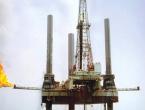
On Tuesday (October 5), international oil prices regained their multi-year highs touched by the previous day. The Organization of Petroleum Exporting Countries and Russia-led partners (OPEC+) stated that they will stick to the existing agreement and gradually increase oil production. This news has driven oil prices to rise sharply. NYMEX crude oil may rise to 78.85 US dollars.

At 15:09 GMT+8, NYMEX crude oil futures rose 0.15% to $77.74/barrel; ICE Brent crude oil futures rose 0.27% to $81.48/barrel.


The two cities closed up 2.27% and 2.56% respectively overnight, and set a new high of US$78.38/barrel since November 10, 2014 and a new high of US$82/barrel since October 14, 2018.

OPEC+ said on Monday (October 4) that it will maintain the current agreement to increase production by 400,000 barrels per day per month, ignoring calls from major global consumer countries such as the United States and India to accelerate production. This move is expected to further increase inflationary pressures, and consumer countries worry that inflationary pressures will undermine economic recovery.

The organization agreed in July to increase production by 400,000 barrels per day at least until April 2022, in order to gradually end the current 5.8 million barrels per day production reduction plan. The current reduction in production has been much lower than the reduction in production during the worst period of the epidemic.

Barclays Bank analyst Amarpreet Singh said in the report that OPEC+’s decision reflects the group’s internal expectations for next year’s surplus and limited domestic capacity for major oil producers, and lack of urgency to increase production. Given that the oil ministers only reiterated the decision announced in July, the jump in oil prices overnight "seems a bit too much, but it shows how tight the market is.

On the daily chart, U.S. oil is in an upward ((3)) wave that started from $61.74, breaking through the 23.6% target of $78.37. The upper resistance looks at the $80 mark and ((3)) the 38.2% target of 88.66. Dollar.

On the hourly chart, oil prices are in an upward ((v)) wave starting from $73.15, breaking the 138.2% target of $78.01, and the upper resistance looks to the 161.8% target of $78.85. ((v)) Wave is a sub-wave of three upward waves that started at 67.58 USD.