• English
  • 简体中文
  • 繁體中文
  • Tiếng Việt
  • ไทย
  • Indonesia
Subscribe
Real-time News
On January 27th, it was reported that under the trade agreement reached between India and the European Union, India has agreed to grant European automakers a quota far exceeding that of other recent agreements, significantly reducing tariffs and opening greater access to its long-protected automotive market. The agreement will gradually allow up to 250,000 European-made cars to enter India at preferential tariff rates, a figure significantly higher than the 37,000 quota granted to the UK under another agreement. Import tariffs on approximately 160,000 internal combustion engine vehicles will be reduced to 10% within five years, while tariffs on 90,000 electric vehicles will not begin to decrease until the tenth year to protect Indias emerging electric vehicle market. Initial in-quota tariffs for most vehicle categories will start at approximately 30%. Beyond this quota, the trade agreement also stipulates that tariffs on gasoline-powered vehicles will be reduced to 35% within ten years. This represents a substantial tariff reduction compared to Indias current tariffs of up to 110% on imported cars. This unprecedented quota arrangement signifies that both sides are reshaping their economic relationship through a trade agreement.Sichuan Jiuzhou stated on its interactive platform on January 27 that the company has not yet started any mobile communication-related businesses.Putins special envoy Dmitriev: Ukraines withdrawal of troops from the Donbas region is the path to peace for Ukraine.Ukraines Energy Minister: €85 million will be allocated through the European Bank for Reconstruction and Development to purchase additional natural gas for Ukraine.On January 27th, the Shanghai Futures Exchange (SHFE) reported the following data on energy and chemical warehouse receipts and changes: 1. Pulp futures warehouse receipts: 129,494 tons, an increase of 940 tons compared to the previous trading day; 2. Pulp futures mill warehouse receipts: 11,000 tons, unchanged from the previous trading day; 3. Offset paper futures warehouse receipts: 0 tons, unchanged from the previous trading day; 4. Offset paper futures mill warehouse receipts: 2,840 tons, unchanged from the previous trading day; 5. Fuel oil futures warehouse receipts: 0 tons, unchanged from the previous trading day. 6. Petroleum asphalt futures warehouse receipts: 10,000 tons, unchanged from the previous trading day; 7. Petroleum asphalt futures factory warehouse receipts: 28,480 tons, unchanged from the previous trading day; 8. Medium-sulfur crude oil futures warehouse receipts: 3,464,000 barrels, unchanged from the previous trading day; 9. Low-sulfur fuel oil futures warehouse receipts: 6,530 tons, unchanged from the previous trading day; 10. Low-sulfur fuel oil futures factory warehouse receipts: 0 tons, unchanged from the previous trading day.

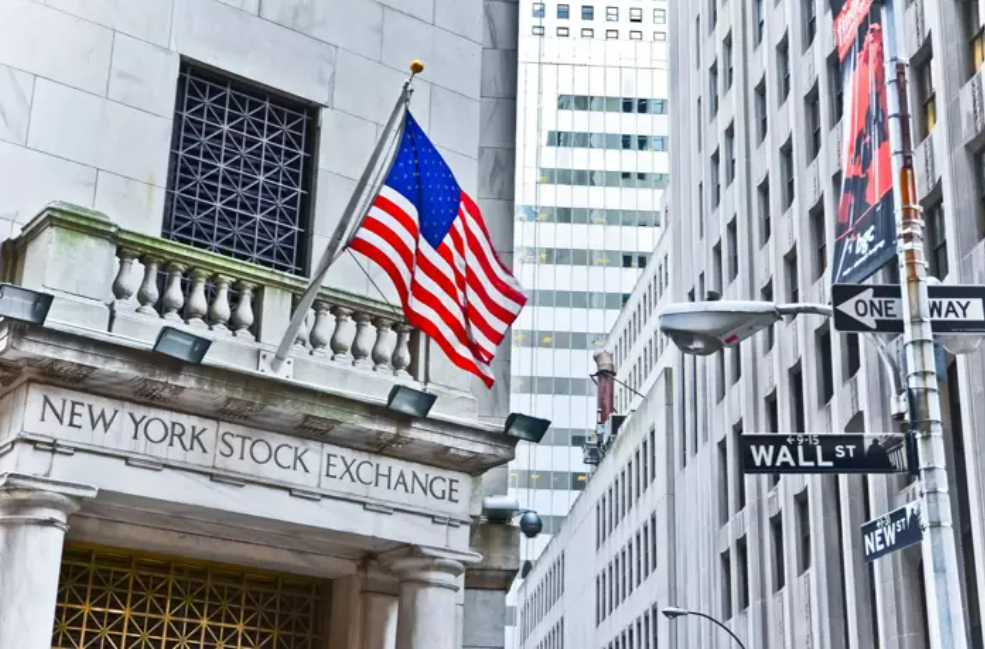
Wall Street Mixed as Investors Digest Strong US Data, Hawkish Fed Rhetoric

Steven Zhao

Aug 19, 2022 15:25

微信截图_20220819152115.png


Mixed trading on Wall Street as investors weigh positive US data and hawkish Fedspeak

Major US stock indexes were neutral on Thursday amid choppy trading as investors digested Wednesday's FOMC minutes release that were not as aggressive as anticipated while still keeping an eye on solid US data and hawkish comments from Fed governors. The S&P 500 index was last trading 0.2% higher in the 4,280 region, while the Dow was down about 0.1% just under 34,000 and the Nasdaq 100 was up about 0.4% just over 13,500.


Weekly unemployment claims data indicated that the US labor market is in in good shape, and the August Philadelphia Fed Manufacturing survey was considerably higher than anticipated, allaying worries that the US economy is in recession. In contrast, hawkish Fed policymaker Ester George continued to sound quite worried about the future for US inflation while hawkish Fed policymaker James Bullard advocated for a 75 bps rate rise next month and rates approaching 4.0% by the end of the year.


In a much more subdued tone, Fed's Mary Daly predicted that rates would only slightly increase next year and reach to just beyond 3.0% by the end of the year. In recent weeks, stocks have risen on expectations that US inflation has peaked, that the US economy will avoid entering a recession, and that the Fed won't need to raise rates aggressively in order to bring inflation down to its objective of 2.0%.


Energy performs better when oil prices increase.


Energy was the best-performing sector of the S&P 500 GICS on Thursday, rising almost 2.5% on a rise in oil prices.


Exxon Mobil's most recent gain was 2.5%. With a rise of slightly over 0.5%, information technology was the second-best performer. Healthcare had the lowest performance, losing about 1%.


The day was good for semiconductor stock prices. At the time of last trade, the Philadelphia Semiconductor Index (SOX) was over 3.0% higher thanks to strong gains from companies including Nvidia, Qualcomm, and Broadcom.


Kohl's fell roughly 7.0% after the firm lowered its top and bottom-line profits projection for the remainder of this year, putting retail stocks back in the spotlight. Home Depot and Walmart both had a minor decline in sympathy after reporting profits that exceeded expectations earlier in the week.