• English
  • 简体中文
  • 繁體中文
  • Tiếng Việt
  • ไทย
  • Indonesia
Subscribe
Real-time News
June 29th - Given the Reserve Bank of Australias recent warning that official interest rates could rise further, issues concerning the Middle East conflict and oil prices remain crucial. Matthew Hassan, Head of Macro Forecasting for Australia at Westpac, expects the normalization of oil and gas supplies to be a "slow and tortuous process." He noted that concerns about persistently high domestic inflation will force the RBA to raise interest rates further in August. Hassan added that this decision will be difficult for the committee given the already weak economic growth.Invesco survey: 61% of central banks believe that the level of US debt has a negative impact on the long-term status of the dollar as a reserve asset.June 29 - On June 28 local time, Venezuelan Acting President Rodriguez stated that power services in La Guaira state, the hardest-hit area by the earthquake, have been restored to 75%, water supply to 68%, and road traffic to approximately 90%, with road and vehicle traffic essentially back to normal.Ruwei Technology announced on the Hong Kong Stock Exchange that it plans to issue 28.08 million H shares in its Hong Kong listing at a price of HK$21.66 per share, with trading expected to commence on July 8.June 29 - According to Kintetsu Railway Company, a train derailed at Kyoto Station at approximately 5:13 AM local time on June 29. Railway authorities are currently inspecting the line, and service on both directions of the Kintetsu Kyoto Line between Kyoto Station and Kamitoribaguchi Station is suspended. No injuries have been reported so far.

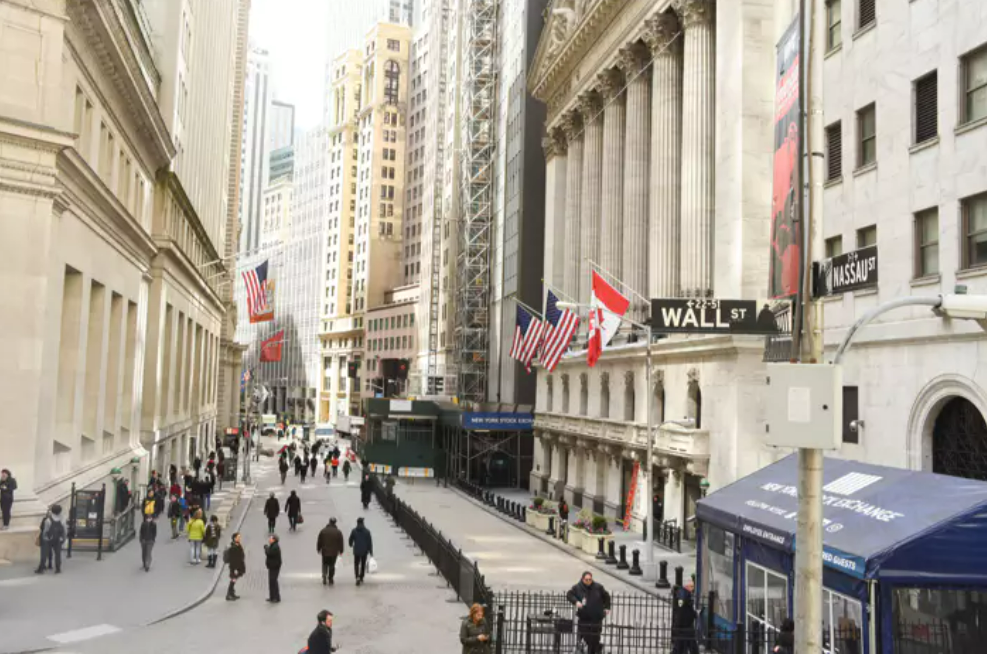
Wall Street Mixed Ahead of Friday’s US Jobs Data; Energy Stocks Drop 3.6% on Oil Price Decline

Skylar Shaw

Aug 05, 2022 15:39

微信截图_20220805152043.png

Indices Are Mixed, and Energy Stocks Are Hurt Due to the Declining Oil Price

On Thursday, the major US stock indexes were uneven, with the Nasdaq 100 index rising 0.44 percent to new highs over 13,300 since early May, the S&P 500 maintaining flat at 4,150, and the Dow falling 0.26 percent to close to 32,725 points. A near 6.0 percent increase in Advanced Micro Devices and a more than 2.0 percent increase in Amazon's share price were the main drivers of Nasdaq 100 outperformance. While this was happening, Walmart's near 4% decline and Chevron's almost 3% decline weighed on the Dow.


Chevron was hardly the only US oil company to suffer; in fact. Exxon Mobil had a decrease of almost 4.0 percent, while the S&P 500 Energy GICS sector as a whole lost 3.6 percent. This was due to additional drops in the world's oil markets and a dimming demand forecast. WTI dropped to below $90 per barrel, its lowest point since February 2014, just before Russia invaded Ukraine.


The price of Coinbase Global's stock increased by 10% at the close of business on Thursday as a result of the announcement that global asset management firm Blackrock would provide its customers with access to cryptocurrency trading services via Coinbase's institutional platform, Coinbase Prime. Shares of COIN had increased by as much as 44% throughout the day at one point.

Investor Attention Turns to the NFP Data on Friday

Wall Street was neutral on Thursday, but none of the main indexes experienced significant swings outside of previous levels due to investors' caution ahead of the Friday publication of important US job market data. The assumption that US inflation has peaked and the notion that the labor market is now weakening as the US economy slows are just two emerging economic storylines that recent data has shown are forming.


The second of these two storylines was in fact strengthened on Thursday by new data showing an increase in US weekly unemployment claims, perhaps putting pressure on the US currency and US rates. Traders will consider Friday's data in light of how it contributes to these stories. It may be more confident in a less aggressive Fed tightening forecast if the pace of job increases slows from June's 372,000 and the pace of average hourly wage growth moderates from June's 5.1 percent YoY.


Given that the battle against inflation is far from being won, Fed officials have been careful this week to caution the markets not to get ahead of themselves by betting on rate decreases in 2023. The Fed's Loretta Mester signaled that the bank is open to another 75 basis point rate rise in September, depending on the data, and said that the Fed would need to see many months of inflation drifting down before the central bank would take its foot off the throttle in terms of tightening.