• English
  • 简体中文
  • 繁體中文
  • Tiếng Việt
  • ไทย
  • Indonesia
Subscribe
Real-time News
February 4th - At 10:00 AM today (February 4th), the State Council Information Office held a press conference to introduce the relevant situation regarding anchoring agricultural and rural modernization and solidly promoting the comprehensive revitalization of rural areas, and answered questions from reporters. The conference introduced that the Central Document No. 1 clearly outlines the major tasks and key work in the "agriculture, rural areas, and farmers" sector this year. The main content can be summarized as "four key tasks and two supporting guarantees." The "four key tasks" are: improving the comprehensive agricultural production capacity and quality efficiency; implementing regular and precise assistance; actively promoting stable income growth for farmers; and promoting the construction of livable, workable, and beautiful villages according to local conditions. The "two supporting guarantees" are: strengthening institutional and mechanism innovation and strengthening the Partys comprehensive leadership over "agriculture, rural areas, and farmers" work.February 4th - At 10:00 AM today (February 4th), the State Council Information Office held a press conference to introduce the relevant situation regarding anchoring agricultural and rural modernization and solidly promoting the comprehensive revitalization of rural areas, and answered questions from reporters. The conference stated that in the past year, farmers living standards have significantly improved. Farmers incomes have continued to grow, with the per capita disposable income of farmers reaching 24,456 yuan in 2025, a real increase of 6% over the previous year. The income gap between urban and rural residents has narrowed from 2.56:1 in 2020 to 2.31:1, and farmers living conditions, including clothing, food, housing, and transportation, have continuously improved.According to Axios, nuclear talks between the United States and Iran are expected to begin in Oman on Friday. The Trump administration has agreed to Irans request to move the talks from Türkiye.February 4th - In 2025, courts across China vigorously promoted the clearing of overdue payments owed by government agencies and public institutions to small and medium-sized enterprises (SMEs), concluding 9,166 cases and recovering 31.142 billion yuan. Courts strictly implemented the judicial interpretation on "back-to-back" clauses (the "Reply on the Validity of Clauses Between Large Enterprises and SMEs Where Payment is Predicated on Third-Party Payment") to prevent large enterprises from abusing their dominant position to "bully" smaller enterprises. Courts nationwide directly applied this judicial interpretation to conclude 709 cases, helping SMEs recover 1.9 billion yuan in overdue payments.Hong Kong-listed chip stocks opened lower, with Shanghai Fudan (01385.HK) falling over 4%, followed by declines in other stocks such as Hua Hong Semiconductor (01347.HK), GigaDevice (03986.HK), SMIC (00981.HK), ZTE (00763.HK), and Biren Technology (06082.HK). Innoscience (02577.HK) bucked the trend, rising over 6%.

The international oil price is likely to soar to 180 US dollars, and it may be the driving force behind it

Oct 26, 2021 10:59

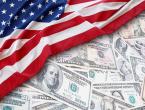
Last year, shortly after the World Health Organization (WHO) declared the new crown virus a pandemic, governments of various countries introduced large-scale monetary and fiscal stimulus to prevent the economic impact of the pandemic. The U.S. federal government has taken a series of extensive measures, injecting about $4 trillion into the economy, including direct distribution of cash to households, increasing unemployment benefits, and setting up several new grants and loan programs for companies.

Driven by rising consumer demand, supply chain restrictions, and soaring commodity prices, U.S. inflation has soared rapidly and has remained high. The consumer price index (CPI) rose 5.4% year-on-year in August, the largest increase since July 2008.

There is a causal relationship between oil prices and inflation. As oil prices rise, inflation tends to move in the same direction. On the other hand, inflation tends to fall as oil prices fall. This is the case, because oil is the main input to the economy, and if the cost of inputs rises, so should the cost of the final product.

Recently, U.S. President Biden tried to calm people’s concerns that rising inflation may harm the U.S. economic recovery and undermine his $4 trillion spending plan. Prior to this, although the economy continued to recover after the lockdown related to the new crown epidemic, US inflation still rose sharply.

The main reason for the increase in inflation is that the demand for goods and services exceeds the company’s ability to keep up with supply-side bottlenecks that hinder various industries, including the semiconductor and solar industries.

The US government may feel a little nervous about high oil prices, not only because of the historical role that oil has played in determining inflation trends, but also because oil prices pose a risk to the future political landscape. As we all know, the price of natural gas has a great influence on consumer psychology.

Fortunately, the relationship between oil and inflation has been greatly weakened since the 1980s.

For example, during the 1990s and the Gulf War oil crisis, although crude oil prices doubled in six months, from about $14 to about $30, inflation remained stable. This decoupling between the two indicators became more pronounced during the oil price hike from 1999 to 2005, when the average annual nominal price of oil rose from US$16.50 to US$50, and the CPI rose to US$164.30 in January 1999. USD 196.80 in December 2005.

U.S. crude oil futures prices may stand at $180 at the end of 2022


Over the years, the price correlation between crude oil and gasoline has changed a lot, which is not conducive to consumers. Most states in the United States have raised gasoline taxes, refiners face new regulations that increase costs, and trucks that deliver natural gas to gas stations lack drivers.

The relationship between high oil prices and high inflation is not that simple. In fact, some experts even put forward a somewhat convoluted argument that high inflation and a weaker U.S. dollar will push up oil prices, not the other way around.

The U.S. economy is heading towards hyperinflation caused by the epidemic. It took five years to solve the previous quantitative easing policy. Now it has been replicated in less than a year. With the rapid expansion of the money supply, this is just a question of when hyperinflation will hit.

Analysts said that their model currently targets US crude oil futures in the $90/barrel range, which is close to 16% higher than the current oil price.

Experts believe that in view of the government's unrestrained release of water to stimulate the economy, the U.S. dollar may depreciate sharply. By the end of 2022, U.S. crude oil futures prices will be pushed to more than $180 per barrel.

We are not very optimistic about this ultra-optimistic prospect. The reason is simple. High oil prices are not what the Biden administration hopes for, nor are they in line with the current interests of the United States. The U.S. government will definitely require OPEC oil producing countries such as Saudi Arabia to increase production.