• English
  • 简体中文
  • 繁體中文
  • Tiếng Việt
  • ไทย
  • Indonesia
Subscribe
Real-time News
Kyiv officials say Russia is attacking the capital with ballistic missiles.According to the New York Times: Iranian and U.S. officials have indicated that Iran is willing to shut down or suspend its nuclear program as a major concession to the United States.1. All three major U.S. stock indexes closed higher. The Dow Jones Industrial Average rose 1.05% to 49,407.66 points, the S&P 500 rose 0.54% to 6,976.44 points, and the Nasdaq Composite rose 0.56% to 23,592.11 points. Caterpillar Inc. rose more than 5%, and Walmart Inc. rose more than 4%, leading the Dow. The Wind U.S. Tech Giants Index rose 0.11%, with Apple Inc. rising more than 4% and Google Inc. rising more than 1%. The Nasdaq China Golden Dragon Index fell 0.65%, with XPeng Motors Inc. falling more than 8% and TAL Education Group Inc. falling more than 4%. Investors temporarily ignored the recent declines in silver and Bitcoin, and instead focused on the earnings reports of tech giants and the January non-farm payroll report. 2. All three major European stock indexes closed higher. The German DAX Index rose 1.09% to 24,806.1 points, the French CAC40 Index rose 0.67% to 8,181.17 points, and the UK FTSE 100 Index rose 1.15% to 10,341.56 points. 3. US Treasury yields rose across the board. The 2-year Treasury yield rose 4.71 basis points to 3.572%, the 3-year Treasury yield rose 5.66 basis points to 3.643%, the 5-year Treasury yield rose 4.52 basis points to 3.837%, the 10-year Treasury yield rose 4.39 basis points to 4.279%, and the 30-year Treasury yield rose 4.14 basis points to 4.912%. 4. The WTI crude oil futures contract closed down 4.42% at $62.33 per barrel; the Brent crude oil futures contract fell 4.1% to $66.48 per barrel. 5. International precious metals futures closed mixed. COMEX gold futures fell 1.35% to $4,680.90 per ounce, while COMEX silver futures rose 0.93% to $79.27 per ounce. Federal Reserve officials emphasized that interest rates would not be cut in 2026, maintaining a tight monetary policy. Hawkish nominees for chairman reinforced tightening expectations, boosting the dollar. Geopolitical safe-haven demand weakened, and exchanges increases in margin requirements exacerbated the clearing of leveraged funds. 6. London base metals all fell. LME copper fell 1.96% to $12,900 per tonne, LME zinc fell 2.45% to $3,318.5 per tonne, LME nickel fell 5.06% to $17,045 per tonne, LME aluminum fell 2.78% to $3,056.5 per tonne, LME tin fell 12.22% to $45,605 per tonne, and LME lead fell 1.92% to $1,970.5 per tonne.Nvidia (NVDA.O) shares rose as much as 0.8% in after-hours trading.OpenAI founder Altman: We are delighted to partner with NVIDIA (NVDA.O), whose AI chips are among the best in the world. We hope to become a major long-term customer.

The global energy crisis threatens supply, and U.S. oil has risen by 5% this week and once rose to the 80 mark

Eden

Oct 26, 2021 11:00

On Friday (October 8) U.S. crude oil rose 1.29 US dollars in late trading, or 1.65%, to close at 79.59 US dollars per barrel. The cumulative increase this week was 5.08%, marking the seventh consecutive week of gains, the longest consecutive week since December last year. rise. Oil prices rose by 0.63 US dollars, an increase of 0.77%, to close at 82.58 US dollars per barrel, a cumulative increase of 4.22% this week. US gasoline futures also closed at their highest level since October 2014. While the global energy crisis boosted demand, OPEC+ oil-producing countries still maintained tight supply. At the same time, the US Department of Energy stated that it has not announced immediate actions to lower oil prices, such as releasing strategic oil reserves. This further supports the oil market.

In the face of improving fuel demand, the energy market has tightened, and many people worry that the cold winter may further tighten the supply of natural gas. The rise in oil prices was stimulated by the soaring prices of natural gas in Europe, which prompted power generation companies to switch to oil for power generation. There are many signs this week that supply will still be restricted. Saudi Aramco said the global natural gas shortage has boosted crude oil demand for power generation and heating.

John Kilduff, a partner of Again Capital in New York, said that the fundamental background is tight supply, which will continue to push crude oil prices to rise steadily. The soaring natural gas price indicates a surge in demand for crude oil this winter.

On Friday, the call option premium exceeded the put option premium for the first time since October 2019. The bullish trade in the oil options market has been very active in recent weeks. Thousands of contracts were traded last week. If the oil price rises to US$100 or even US$200 per barrel, profits will be made. On Tuesday, WTI call options volume reached its highest level since March 2020. In the past 7 days, the open interest of call options with strike prices ranging from $90 to $95 has increased by approximately 23,000.

ICAP energy expert Scott Shelton said that severe winter weather "increased the upside potential of this market, and this skew will last for several months." The so-called call skew means that call options are more expensive than similar put options. The situation is extraordinary in the crude oil market. Generally, put options are more expensive, which partly reflects the tendency of producers to buy put options to hedge their output.

According to the US Commodity Futures Trading Commission (CFTC) data, as of the week of October 5, the speculative net long position of WTI crude oil futures increased by 8,902 to 325,578. The Brent crude oil net long position held by speculators on the Intercontinental Exchange (ICE) increased by 3,723 contracts to 332,677 contracts, a record high in more than six months.

US Baker Hughes Oil Services said that as of October 8, the total number of wells drilled in the United States was 533, which is the fifth consecutive week of adding rigs. The total number of oil rigs was 433, an increase of 5 from last week.

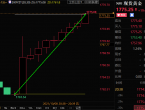
(U.S. Oil Hour Chart)