• English
  • 简体中文
  • 繁體中文
  • Tiếng Việt
  • ไทย
  • Indonesia
Subscribe
Real-time News
UBS raised its target price for Airbnb (ABNB.O) from $149 to $153.On April 27th, Insight Investment analyst Jill Hilzel stated in a report that investors are expected to focus on the divided vote at this weeks Bank of England interest rate decision. London Stock Exchange data shows that the market consensus is that the Bank of England will keep interest rates unchanged at 3.75%, with a market probability of 84%. Hilzel added that the market will also be watching any updates from the Bank of England on its UK growth and inflation forecasts. She noted that the economic growth forecast is expected to be revised downwards, while the inflation forecast is likely to be revised upwards.April 27 - Due to the US blockade of Iranian ports, Iran is unable to ship oil to customers, and empty tankers cannot dock to load cargo, leading to a continuous accumulation of its oil reserves. To avoid the shutdown of some oil fields, Iran has begun storing oil on floating tankers. However, according to current and former Iranian officials, the country, which heavily relies on oil exports for most of its revenue, is now adopting methods not previously used to save storage space. These officials stated that Iranian authorities are using containers and "makeshift storage facilities," namely, dilapidated and abandoned storage tanks in the southern oil-producing regions of Ahvaz and Asaluyeh, to store oil.Ukrainian Prime Minister: During my meeting with Polish Prime Minister Tusk, I expressed to the Polish people their gratitude for their continued support of Ukraine. In the near future, we look forward to signing an agreement on joint control of shared border crossings and resolving technical issues related to registering Ukrainian transport vehicles in the SENT/RMPD system.April 27: Building materials transaction volume was 123,100 tons, an increase of 13.77% compared to the previous trading day. April 24: Building materials transaction volume was 108,200 tons, an increase of 16.97% compared to the previous trading day. April 23: Building materials transaction volume was 92,500 tons, a decrease of 18.72% compared to the previous trading day. April 22: Building materials transaction volume was 113,800 tons, a decrease of 0.35% compared to the previous trading day. April 21: Building materials transaction volume was 114,200 tons, a decrease of 21.08% compared to the previous trading day. Last weeks average: Building materials transaction volume was 110,000 tons.

The End of the Middle-Class? Exploring the Great Wealth Transfer

Steven Zhao

Jul 26, 2022 11:53

微信截图_20220726114859.png


In this episode of Kinesis Money's "Live from the Vault," Andrew welcomes macroeconomic expert and filmmaker Peter Antico to discuss the pressing issues of rising income inequality and corruption that are covered in his most recent film, "The Paradigm of Money."


With a focus on market manipulation as a whole, Pete delves into the flaws at the core of the American financial system, using his film as an enlightening tool to reveal the startling extent of authorized theft and exploitation of common people.

We do not share a vessel

Even if the global financial crisis has clearly had an impact on the majority of people worldwide, sharply decreasing the ordinary person's quality of living, it has also produced some glaring winners who have managed to boost their wealth to unfathomable heights.


A broken chain of integrity between the government, top financial institutions, and the rest of society is evident from the unprecedented extent of the Global Wealth Transfer between the 90% of society and the 1% oligarchic aristocracy.

food handouts for the middle class

Meanwhile, the government's negative reaction to Covid-19, which caused the supply chain to be destroyed and the currency to be devalued, is now having a negative impact not only on common people and their enterprises but also on whole countries, reorganizing their socio-economic structure.


The American Middle Class, which just a few years ago made up around half of families, is now in danger of disappearing entirely. The common consumer is squeezed by the post-pandemic financial crisis' inflationary atmosphere since even simply paying for necessities uses up all of their cash. A large portion of the population is moving ever-closer to poverty as a result of the median wage not being sufficient to maintain what was formerly a Middle-Class lifestyle.

It's too big to fail

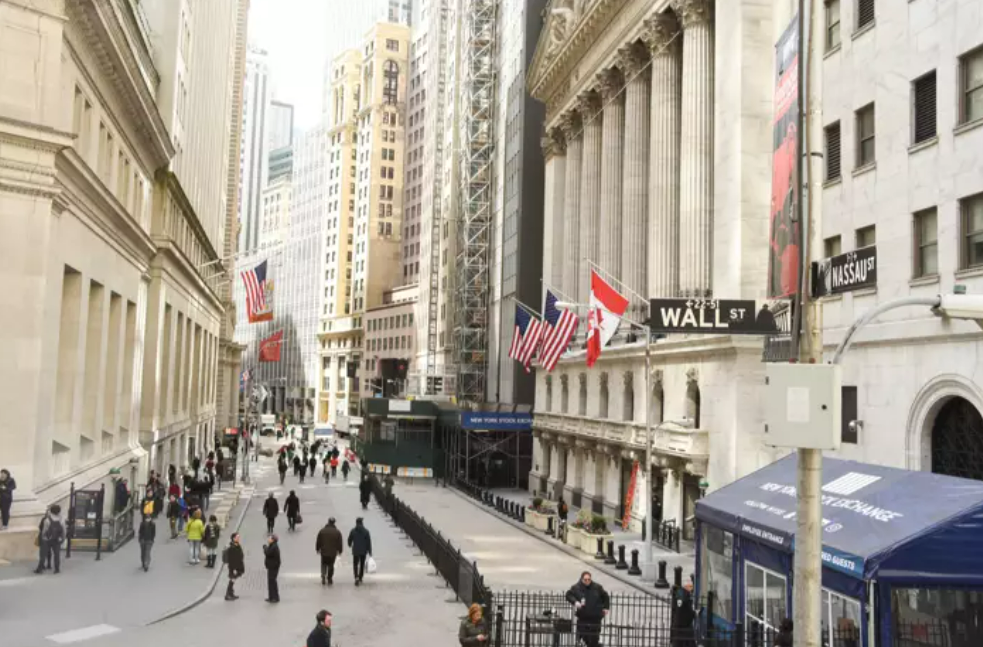
Why, then, are the wealthy growing wealthier while the poor are becoming poorer? One of the key distinctions between Wall Street and Main Street, as noted by Pete Antico, is the latter's internal Too Big to Fail policy. The government can rely on taxpayer-funded trillion-dollar bailouts for the biggest organizations, and the typical person becomes conditioned to accept and normalize this kind of behavior. "The government bailing out banks for perpetrating fraud is sinister behavior," said Pete.


They won't get such assistance if the general public is only late on a credit card payment. Even in the Congress, there isn't much accountability in this system, which is pretty empirical.


What does this mean for the ordinary American's ability to safeguard their funds from major market players? If it's even feasible to change the way we think about money, only time will tell. However, the first step in developing a better monetary alternative that is more transparent, sustainable, and advantageous to common people may be financial education and bringing market malfeasances to the attention of the general public.