• English
  • 简体中文
  • 繁體中文
  • Tiếng Việt
  • ไทย
  • Indonesia
Subscribe
Real-time News
1. According to the Financial Times, Abu Dhabi National Oil Company plans to build an oil product pipeline bypassing the Strait of Hormuz. 2. According to foreign media reports, a joint statement shows that Indonesian business groups are calling on the government to issue technical guidelines for its plans to centralize exports and retain export profits in state-owned banks. The Indonesian Employers Association, along with the Miners, Coal Miners, Nickel Smelters, and Palm Oil Producers Association, stated that they support the new regulations but hope the government will cooperate with the private sector in their implementation. 3. According to CCTV News, on the 2nd local time, Israeli sources reported that the fourth round of Israel-Lebanon talks was held in Washington, D.C. 4. According to Iranian media Fars News, an informed source revealed that although some Western media and officials have attempted to describe the information exchange process between Iran and the United States as normal, there is currently no information exchange between the two sides. Information exchanges between Iran and the United States aimed at reaching a preliminary memorandum of understanding have been interrupted for at least several days. 5. Federal Reserves Hamak stated that inflation may require policy assistance to reach 2%; if the inflation trend does not cool, the Fed may need to act "as soon as possible"; maintaining stable interest rates is reasonable at present, but if high inflation persists, a larger adjustment may be needed; there are no signs of rising inflation expectations. 6. According to the European Commission, as of May 31, the EUs palm oil imports for 2025/26 were 2.6 million tons, compared to 2.75 million tons in the same period last year. The EUs soybean imports for 2025/26 were 12.38 million tons, compared to 13.32 million tons last year. 7. Iranian media reported on the 2nd that the application system for ship passage permits in the Strait of Hormuz is now fully open, allowing ship owners and captains worldwide to submit applications at any time of day, 24 hours a day. 8. The World Meteorological Organization issued a bulletin on the 2nd stating that considering factors such as unusually warm tropical Pacific Ocean waters, the probability of an El Niño event occurring from June to August is 80%, and the risk of extreme weather in the coming months is rising accordingly. 9. According to Dan Struven, co-head of global commodities research at Goldman Sachs, if commercial crude oil inventories continue to decline at the recent rate with the Strait of Hormuz almost completely closed, U.S. diesel inventories could fall to a critical level by August, enough to sustain only 20 days of supply. 10. U.S. JOLTs job openings surged in April, rising to 7.62 million from 6.89 million in March, reaching the highest level in nearly two years, while layoffs decreased. These signs indicate that the labor market remains strong despite pressure from rising energy costs due to the war with Iran.Bank of England Governor Bailey: Not all AI-related stocks will be winners.US Secretary of State Rubio: Iran will not receive the lifting of sanctions simply because the Strait of Hormuz has been reopened.U.S. Secretary of State Marco Rubio: Any reduction or easing of sanctions on Iran will be contingent upon the fulfillment of relevant conditions.Bank of England Governor Bailey: It is necessary to maintain the labor supply to promote economic growth.

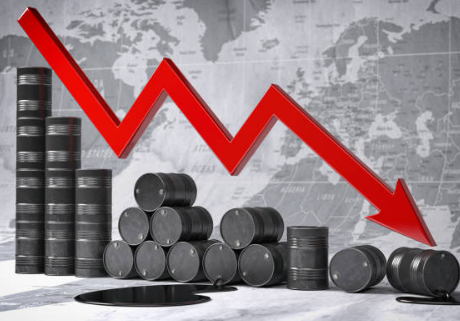
Oil prices decrease as Saudi Aramco expresses its ready to boost oil output

Haiden Holmes

Aug 15, 2022 10:48

25.png


Oil prices declined for a second straight session on Monday after the president of the world's largest exporter, Saudi Aramco (TADAWUL:2222), declared that the business is prepared to raise output and three offshore U.S. Gulf of Mexico rigs restarted operations following a weeklong outage.


Saturday at 00:34 GMT, Brent crude futures declined by 27 cents, or 0.3%, to $97.88 a barrel, following a 1.5% decline on Friday. Following a recent fall of 2.4%, the price of a barrel of U.S. West Texas Intermediate crude was $91.87, down 22 cents, or 0.2%.


If ordered by the Saudi Arabian government, Saudi Aramco is prepared to boost crude oil production to its maximum capacity of 12 million barrels per day (bpd), according to Saudi Aramco CEO Amin Nasser.


Nasser stated, "We are confident in our ability to expand production to 12 million barrels per day (bpd) if the government or energy ministry seeks an increase." He stated that China's easing of COVID-19 restrictions and a rise in the aviation industry could increase demand.


China's economic figures will provide investors with insight into crude oil demand in the world's largest crude oil importer on Monday.


Last week, oil prices climbed by more than 3% as a result of a damaged oil pipeline component that halted production at numerous offshore Gulf of Mexico sites.


According to a Louisiana official, once repairs were completed late on Friday, producers tried to revive some of the halted output.


Last week, the number of oil rigs in the United States grew by three to 601, as reported by Baker Hughes Co on Friday. The number of oil rigs, an early indicator of future output, has increased slowly, and it is anticipated that oil production will not recover from pandemic-related decreases until the following year.


Ahead of EU sanctions on Russian crude oil and refined product exports this winter, constrained supplies continued to bolster global oil markets.