• English
  • 简体中文
  • 繁體中文
  • Tiếng Việt
  • ไทย
  • Indonesia
Subscribe
Real-time News
On December 20th, at the Moore Threads 2025 MUSA Developer Conference, in addition to the new "Huagang" architecture and the Huashan chip, Moore Threads also unveiled its Lushan graphics chip. Lushan is a high-performance graphics rendering chip built on the Huagang architecture, promising a 15x improvement in AAA game rendering, a 50x improvement in ray tracing performance, an 8x improvement in atomic memory access performance, and a 4x improvement in video memory capacity. AI rendering performance is improved by 64x, geometry processing performance by 16x, and texture fill performance by 4x. Besides supporting gaming, it also supports rendering for all CAD, CAE, and other graphic design applications.According to Business Insider, Google has warned some visa holders against leaving the United States, as their return home could face “significant” delays of up to a year.On December 20th, an official from the National Development and Reform Commission answered reporters questions regarding the "Rules on Pricing Behavior of Internet Platforms," outlining the next steps for ensuring its implementation: First, conduct policy dissemination. Focusing on regulating price competition in the platform economy and protecting the legitimate rights and interests of consumers and platform operators, conduct in-depth policy dissemination to remind operators to operate legally and compliantly. Second, promote industry self-regulation. Give full play to the role of industry associations and chambers of commerce, encouraging relevant operators to take the lead in complying with regulatory requirements and consciously regulate their pricing behavior. Third, strengthen monitoring and evaluation. Closely monitor price competition in the platform economy, track and evaluate the implementation of the "Rules on Pricing Behavior," and promptly identify any problems. Fourth, strengthen regulatory enforcement. Implement the regulatory measures proposed in the "Rules on Pricing Behavior," investigate and punish price violations according to law, and maintain a fair and competitive market environment.On December 20th, the "Rules on Pricing Behavior of Internet Platforms" were issued. The rules stipulate that platform operators and operators within the platform shall indicate the promotional price or price promotion rules in a manner that is easy for consumers to understand, and comply with the following provisions: (1) Publicly display the promotional rules, activity period, scope of application, etc. in a prominent position on the page; (2) Accurately indicate the discount or price reduction basis; (3) If the price is offset by points, gift certificates, vouchers, coupons, prepayments, etc., the specific calculation method shall be clearly indicated.On December 20th, the "Rules on Price Behavior of Internet Platforms" were issued. The rules stipulate that platform operators and operators within the platform shall not violate Article 14, Paragraph 3 of the "Price Law of the Peoples Republic of China" by using the following means to fabricate and disseminate information about price increases, drive up prices, and promote excessive price increases of commodities: (1) fabricating and disseminating information about supply shortages or a surge in market demand; (2) fabricating and disseminating information about other operators having already raised or preparing to raise prices; (3) disseminating information containing deceptive or misleading language to inflate price expectations; (4) failing to sell commodities to external parties in a timely manner without justifiable reasons, exceeding the normal storage quantity or storage period, hoarding large quantities of commodities with tight market supply or abnormal price fluctuations, and continuing to hoard after being warned; (5) forcing customers to purchase additional goods, thereby indirectly and significantly increasing commodity prices; (6) using other means to drive up prices and promote excessively rapid and excessive price increases of commodities.

Oil Prices Climb As U.S. Stocks Plummet Before Demand-heavy Holidays

Charlie Brooks

Dec 22, 2022 11:37

119.png


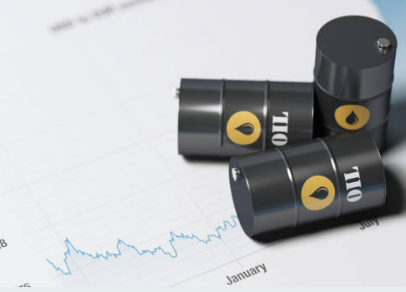
Oil prices extended advances into a fourth consecutive session on Thursday after inventory data indicated that U.S. supplies were tight ahead of a demand-heavy holiday season; but, caution ahead of crucial economic indicators restrained gains.


In the preceding week, U.S. crude inventories decreased far more than anticipated, with drops in heating oil and jet fuel stocks occurring just ahead of an anticipated rise in travel demand and a possible cold snap towards the end of the year.


Even as the government took more than 3 million barrels of crude from the Strategic Petroleum Reserve, inventories decreased, showing that demand remained solid.


This week's increase in the yen has exerted downward pressure on the dollar, which in turn has boosted crude oil prices. However, the dollar stabilized on Thursday ahead of critical inflation and economic growth reports.


Brent oil futures traded in London increased 0.4% to $82.56 per barrel by 21:21 ET, while West Texas Intermediate futures rose 0.6% to $78.73 per barrel (02:21 GMT). Both contracts are trading approximately 5% higher for the week, with confidence regarding the reopening of China's economy further boosting sentiment.


On Thursday and Friday, respectively, revised U.S. gross domestic product (GDP) figures and the personal consumption expenditures (PCE) price index will be released. The second reading of U.S. economic growth for the third quarter is projected to remain unchanged at 2.9%, as robust consumer spending and a stable labor market supported the world's largest economy.


The PCE data, which is the Federal Reserve's favored inflation gauge, will be monitored more closely. Even while the number is predicted to have decreased more in November compared to the previous month, it is still anticipated to be considerably above the Fed's target range.


Last week, oil prices fell to a one-year low due to fears of a probable recession, which were fueled by rising interest rates and surging inflation. A spate of hawkish signals from the world's most influential central banks has also weighed on petroleum prices.


However, crude prices rebounded from annual lows as the dollar weakened. In addition to optimism on China's reopening, the government loosened anti-COVID laws.


China's near-term picture remains murky, as the world's largest crude importer is also confronting a massive increase in COVID-19 cases. However, the markets are bracing themselves for a potential revival in Chinese demand, which, according to some analysts, could bring oil prices back above $100 in 2023.