• English
  • 简体中文
  • 繁體中文
  • Tiếng Việt
  • ไทย
  • Indonesia
Subscribe
Real-time News
Reserve Bank of Australia Governor Bullock will hold a monetary policy press conference in ten minutes.The governor of Poltava Oblast in Ukraine said that four people were killed in a nighttime attack by Russian drones and missiles.On May 5th, the Reserve Bank of Australia (RBA) raised its benchmark interest rate for the third consecutive time, highlighting its determination to curb stubborn high inflation and solidifying its position as the "lone wolf" among major central banks globally. The RBA voted 8-1 to raise the cash rate from 4.1% to 4.35%, completely reversing the monetary easing cycle of last year. In a statement, the bank said that after three rate hikes, monetary policy is well-prepared to respond to changing circumstances, and the committee is focused on achieving its mandate of price stability and full employment, and will take all necessary actions to achieve this goal. Currently, most economists expect the RBA to remain on hold for an extended period, but a minority believe there will be at least one more rate hike, a view shared by the money market. With three consecutive rate hikes, the RBA committee is also signaling that it prioritizes its 2% to 3% inflation target over all other considerations. This aggressive stance puts further pressure on the Australian government. With one week to go before the annual budget is released, it is expected to address war-related energy price increases and provide temporary cost-of-living relief for households.The Reserve Bank of Australia (RBA) stated that the committee will focus on data and evolving outlook and risk assessments to guide its decision-making.Reserve Bank of Australia: Higher fuel prices are exacerbating inflation, and there are signs that this could have a broader secondary impact on the prices of goods and services.

Gold recovers to $1,800 level as WTI dips $2.0 but is still expected to end the week higher

Daniel Rogers

Aug 15, 2022 14:58

 截屏2022-08-12 下午3.27.23_1024x576.png


The front-month futures contracts for West Texas Intermediate, or WTI, the US benchmark for sweet light crude oil, dropped little more than $2.0 on Friday to just below the $92 per barrel level. A damaged oil pipeline that had halted output at seven offshore oil rigs in the US Gulf of Mexico was being closely followed by traders.


Despite rumors that as much as 410,000 barrels per day of supply had been cut off on Thursday, reports on Friday stated that the pipeline is anticipated to be mended by Friday's end of the day, allowing for a return to business as usual. WTI is expected to conclude the week over $3.0 in the black despite Friday's decline, but technicians still believe it is in a downturn that may push prices as low as the mid-$80s per barrel.


You should only trade derivatives with capital you can afford to lose because doing so carries a significant level of risk to your investment. Trading derivatives may not be appropriate for all investors, so make sure you are fully aware of the risks and, if necessary, seek independent advice. Before engaging in a transaction with us, you should carefully review the Product Disclosure Statement (PDS), which is available from this website or upon request from our offices. Spreads starting at 0.0 pips are available with commission fees of USD $3.50 for every 100k transacted in raw spread accounts. Standard accounts provide spreads starting at 1 pip with no added commission fees. CFD index spreads begin at 0.4 points. Residents of any nation or jurisdiction where such distribution or usage would be in violation of local law or regulation are not the intended audience for the information on this website.


This week's conflicting signals regarding the future for oil demand have been a challenge for oil traders. For instance, the US oil inventory data for this week was peculiar, showing a huge, unexpected increase in headline stockpiles (bearish), but a significant decrease in gasoline stocks (bullish). In the meantime, the International Energy Agency this week revised its prediction for the growth of oil consumption in 2022, citing rising demand for oil amid "switching" away from gas as costs rise. In the meantime, OPEC revised its projection for 2022 demand growth in its monthly report, which was also released this week.


Copper prices fell on Friday as a strengthening US dollar rendered the red metal priced in USD more expensive for foreign purchasers. Last time, copper was down approximately 0.4% and back under $3.70. Data from China released on Friday revealed that the country's loan growth in July was substantially lower than anticipated, which also affected the industrial metals market's mood to some extent. The largest copper consumer in the world is unquestionably China.


However, copper prices are still expected to have increased by more than 3.5% this week, bringing their gains since their mid-July lows under $3.15 to almost 18%. Although recent economic data from China has been spotty at best, government initiatives to revive the economy have boosted confidence in the industrial metal market. The copper market has also received attention, with key manufacturers recently revising lower their output predictions and stocks in significant Chinese/London warehouses under pressure.


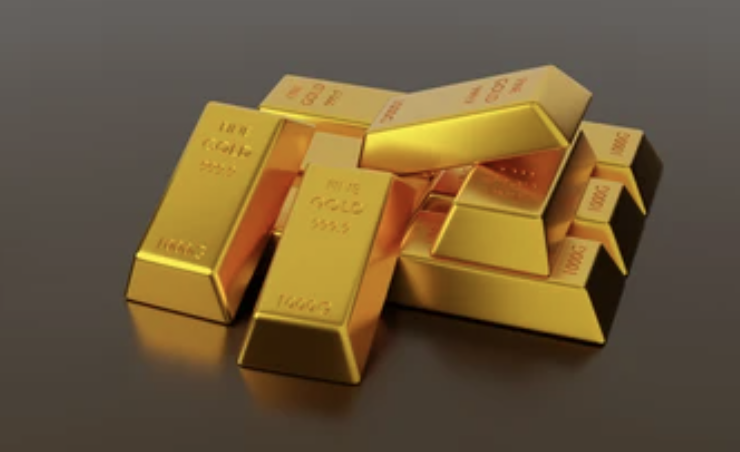
On Friday, despite the stronger US dollar, gold prices rose again to the $1,800 per troy ounce level. The adverse US inflation shocks over the past few days have diminished concerns that the Fed would need to raise rates aggressively in the coming quarters, which would likely be bad for the precious metal. As a result, the precious metal seems set to close the week about 1.4% higher.