• English
  • 简体中文
  • 繁體中文
  • Tiếng Việt
  • ไทย
  • Indonesia
Subscribe
Real-time News
On January 31, Russian Deputy Foreign Minister Grushko stated that the best guarantee for Ukraines security is a concrete guarantee of Russias security, a guarantee that no one in the West has offered. He emphasized, "If we believe that Ukrainian territory will not be used as a bridgehead threatening Russias security, then Ukraines security will also be guaranteed." The Russian Foreign Ministry previously stated that any scenario involving NATO member states deploying troops in Ukraine is absolutely unacceptable to Russia and could lead to a sharp escalation of the situation. The Russian Foreign Ministry also stated that statements from Britain and other European countries regarding the possible deployment of NATO troops in Ukraine are incitement to continue the conflict.January 31st - According to Yahoo Finance, Kevin Warsh, President Trumps nominee for Federal Reserve Chairman, appeared in newly released Epstein case documents released by the US government on Friday. The documents show that Warshs name was listed in the email guest list for the "2010 St. Barths Christmas" event, alongside figures such as Russian oligarch Roman Abramovich; he also attended a dinner hosted by British aristocrat William Astor. This revelation occurred on the same day Warsh was nominated for Fed chairman. His main controversy previously stemmed from his relationship with Republican donor Ronald Lauder, who was accused of influencing Trumps interest in Greenland during his first term and holding business interests there. Warsh may now need to address his relationship with Epstein and his 2010 Christmas trip, and there is also speculation that Trumps nomination is related to their shared social circle.January 31 – With the House of Representatives in recess and unable to consider the appropriations bill, the U.S. federal government entered a technical, partial shutdown at midnight local time on January 31. Analysts point out that although the shutdown is expected to be short-lived, it once again highlights the structural predicament of U.S. fiscal politics. In recent years, temporary funding, short-term extensions, and marginal shutdowns have become the norm in congressional budget battles, with government operations frequently hampered by political disagreements. Currently, the market generally believes that the direct impact of this technical shutdown on financial markets and economic operations is limited, but if subsequent congressional negotiations are again stalled, the risk of a prolonged shutdown and a wider impact cannot be ruled out.January 31st - The US government officially began a partial shutdown early this morning local time. This followed the Senates passage of a spending bill to fund most federal government departments, which was then submitted to the House of Representatives for consideration. However, because House members were not in Washington and would not return until Monday (February 2nd), the Senate vote could not prevent a partial government shutdown.January 31st - According to the UKs Daily Telegraph, British Prime Minister Keir Starmer responded to US President Trumps remarks on Sino-British cooperation in Shanghai on the 30th, stating that ignoring China would be "unwise." "It would be unwise to simply say we should ignore it. You know, French President Macron has already visited (China) and had exchanges, and German Chancellor Merz is also coming to exchange views," Starmer said. "It would not be in our national interest for Britain to be the only country refusing to engage (with China)." Starmer added, "In the past 24 hours, the opening of market access has been warmly welcomed by the business community. They have reported a change in the atmosphere and a significant increase in willingness to cooperate. This is good for our economy."

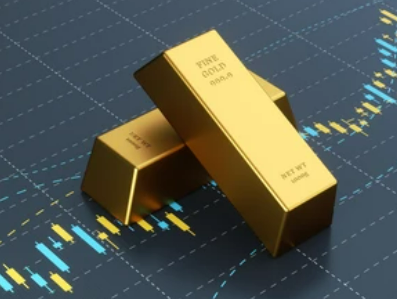
Gold Remains Near $1,650, While China Uncertainty Impacts Copper

Aria Thomas

Oct 18, 2022 14:15

27.png


On Tuesday, gold prices were largely constant, clinging to key support levels as the dollar retreated from recent highs, while uncertainty over China's shrinking metal demand weighed on copper.


Spot gold continued Monday's small gains, trading near $1,650.96 per ounce, while gold futures remained constant at $1,656.20 per ounce at 19:30 ET (23:30 GMT)


As a torrent of positive Wall Street news boosted traders' risk appetite and pushed them to flee the dollar, the dollar's decline benefited the price of gold. However, riskier assets such as stocks and foreign currency profited the most from this development.


After last week's stock market crash, significant bargain-hunting was also spurred by Wall Street firms' earnings announcements that exceeded expectations.


However, the outlook for gold remains negative due to the likelihood of rising U.S. interest rates, especially while inflation remains stubbornly near to its highest levels in four decades. In view of the deteriorating economic outlook, the Federal Reserve has predicted that interest rates will end the year at levels higher than during the 2008 financial crisis.


The probability that the Fed will increase interest rates by 75 basis points in November, its third consecutive increase, is virtually 100% according to the markets.


Rising U.S. interest rates have increased the opportunity cost of holding the yellow metal, which has resulted in a substantial decrease in gold prices this year.


Comparable losses occurred for the majority of other precious metals, with the dollar attracting the lion's share of safe-haven demand.


Copper prices fell for the second day in a row among industrial metals due to signals of weakening demand in China, the largest importer of the red metal.


Copper futures varied at $3.4075 after beginning the week down 0.5%.


Rio Tinto (NYSE:RIO), the world's second-largest miner, forecast poorer iron ore shipments this year on Tuesday, citing weaker industrial activity globally and in China, the company's major customer.


China has lately said that it has no intention of abandoning its zero-COVID policy, which has had a substantial impact on manufacturing activities in 2018. The action exacerbated anxiety for the future of the world's second-largest economy.


Nonetheless, the nation maintained its accommodating monetary policy posture and specified additional growth-promoting stimulative measures.


Together with signs of rising copper markets, these actions should boost the red metal's price recovery this year.