• English
  • 简体中文
  • 繁體中文
  • Tiếng Việt
  • ไทย
  • Indonesia
Subscribe
Real-time News
U.S. Agriculture Secretary Rawlings: More announcements related to increased fertilizer shipments will be released.March 22 – The Australian government stated on the 22nd that although fuel imports have been impacted by the conflict with Iran, supplies remain sufficient and there are no plans for rationing. Regarding the panic buying of gasoline in a few areas, the government urged the public to refuel rationally. Australian Climate Change and Energy Minister Chris Bowen said in a television interview that as of the 21st, the countrys reserves of petrol, diesel, and aviation fuel were sufficient for 38 days, 30 days, and 30 days respectively, and fuel supplies remained "strong."Market news: Fannie Mae and Freddie Mac have made large-scale purchases of mortgage-backed securities.March 22 - Iranian President Ayatollah Peschizian posted on social media this evening (March 22), stating that "attempts to wipe Iran off the map are a desperate trampling on the will of a nation that makes history. Threats and intimidation will only strengthen Irans unity. The Strait of Hormuz is open to everyone except those who violate Iranian territory. Iran will resolutely confront these insane threats on the battlefield."On March 22, U.S. Treasury Secretary Bessenter defended the U.S. and Israels attacks on Iranian infrastructure, claiming that "sometimes you have to escalate to de-escalate." This came shortly after Trump gave Iran 48 hours to open the Strait of Hormuz and threatened to destroy its power plants. Bessenter defended Trumps remarks, saying it was "the only language the Iranians understand." Bessenter also addressed Kharg Island, a key hub for Iranian oil production, claiming that "all options are being considered," including sending U.S. troops to control the island. Bessenter further defended the decision to ease some sanctions on Iran, claiming it was a "soft approach" to the Iranians—using their own oil to retaliate against them.

Gold Price Prediction: The XAU/USD pair recovers from $1,755 as Fed and US-China-inspired risk aversion subsides

Daniel Rogers

Aug 03, 2022 14:44

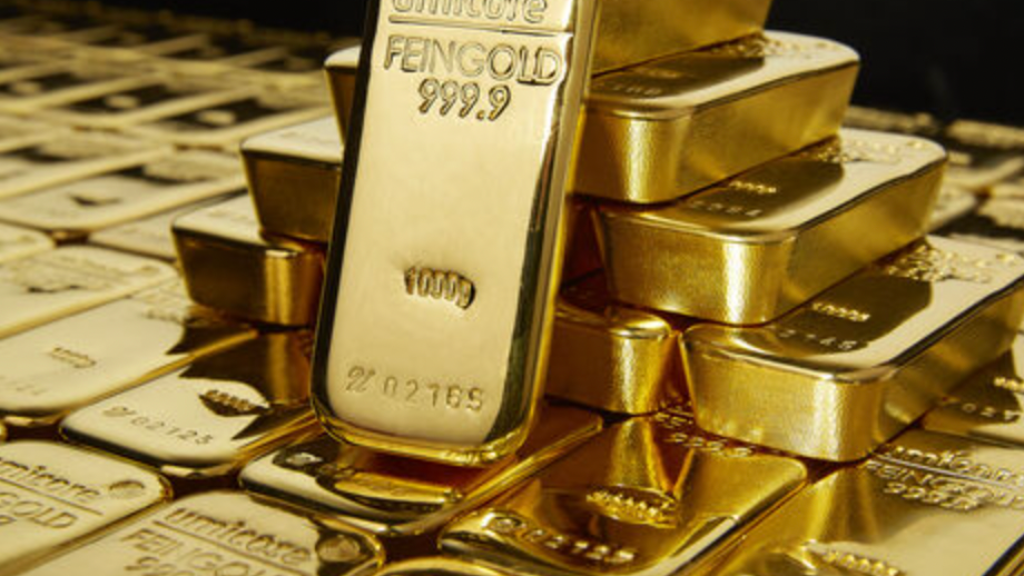
 截屏2022-08-02 下午5.45.57_1024x576.png


During Wednesday's Asian session, the gold price (XAU/USD) regains its intraday high above $1,765 while consolidating the largest daily decline in two weeks. In doing so, the yellow metal applauds the US dollar's retreat from its weekly high amid a lackluster Asian session. The recovery steps also take into account the more robust activity statistics from China.


The US Dollar Index (DXY) falls from the weekly high around 106.55 to 106.34 at press time as market risk aversion decreases in response to July's stronger China Caixin Services PMI. Consequently, the private services index for the dragon country increased to 55.5% from 48 predicted and 54.5 before.


Intraday, S&P 500 Futures increase 0.10 percent, while 10-year US Treasury rates decline 1.5 basis points (bps) to 2.72 percent at the latest.


Earlier in the day, the US-China spat over Taiwan attracted significant attention and prolonged the previous day's risk-averse sentiment, which impacted on gold prices. Recently, Taiwan's Ministry of Defense stated that China's drills surrounding Taiwan reflect the country's will to undermine regional peace and stability. It should be emphasized that China's warning to the United States not to play the Taiwan card and its pledge to punish Taipei independence advocates, as well as its restriction of natural sand shipments to the Asian economy, appeared to amplify the risk-averse sentiment and sink the US dollar. Concerns that squabbles between the world's top two economies may have further negative effects on the global economy exacerbated recession worries.


James Bullard, president of the Federal Reserve Bank of St. Louis, dismissed worries of a US recession while supporting a 50 basis point (bps) rate rise. According to Reuters, the president of the Federal Reserve Bank of San Francisco, Mary Daly, stated that she is awaiting incoming data to determine whether the Fed should slow the rate rises or maintain the present pace. Reuters reported that Chicago Fed President Charles Evans expressed support for a 50 basis point (bps) rate rise at the September meeting if inflation does not improve. In addition, Loretta Mester, president of the Cleveland Fed, stated that she does not believe the US is experiencing a recession and that the job market is in excellent condition. She acknowledged, though, that inflation has not dropped "at all."


US Factory Orders for June and ISM Services PMI for July will combine headlines on China and the Federal Reserve to influence short-term XAU/USD movements.