• English
  • 简体中文
  • 繁體中文
  • Tiếng Việt
  • ไทย
  • Indonesia
Subscribe
Real-time News
On March 12th, Eli Lee, Chief Investment Strategist at Bank of Singapore, stated in a report that disruptions to oil shipments through the Strait of Hormuz, damage to Middle Eastern infrastructure, and increased volatility in crude oil prices could translate into greater risks to equity valuations. This prompted Bank of Singapore to downgrade its asset allocation for Asian (excluding Japan) equities from "overweight" to "neutral." Within the region, Lee remains optimistic about mainland China, Hong Kong, and the Singapore primary market. Lee specifically pointed out that China has accumulated one of the worlds largest strategic oil reserves, enabling it to buffer against the impact of disruptions to exports through the Strait of Hormuz. He added that oil and gas account for only about 4% of Chinas electricity mix, far below the 40%-50% average in many Asian countries and regions.The SC crude oil futures contract surged 16.00% intraday, currently trading at 753.60 yuan per barrel.The main fuel oil contract surged 14.00% intraday, currently trading at 4858.00 yuan/ton.On March 12, INGs commodities strategy team stated in a report that the IEAs plan to release 400 million barrels of oil reserves is insufficient to offset supply losses in the Persian Gulf region. As part of a coordinated effort, the United States will begin releasing 172 million barrels of its strategic petroleum reserves next week. ING estimates this will take approximately 120 days to complete, equivalent to a daily release of about 1.4 million barrels by the US. ING added, "If we assume other countries follow a similar timeline, the daily release would be approximately 3.3 million barrels, far below the current supply losses we are seeing in the Persian Gulf."March 12th - The China Federation of Logistics and Purchasing officially released the "China Logistics Technology Development Report (2025)" today. According to the report, 2025 will see frequent hot topics in my countrys logistics technology development, with new logistics equipment achieving large-scale application. In particular, the deep integration of "artificial intelligence+" into logistics will improve operational efficiency and effectively help reduce overall social logistics costs. In 2025, the ratio of total social logistics costs to GDP will drop to 13.9%, the lowest level on record, meaning that the logistics costs required to achieve a unit of GDP are decreasing. Embossed robots are beginning to enter warehouses and factories, completing a significant leap from "automated guided vehicles" to intelligent agents that can "perceive, think, and operate."

Concentrate on U.S. Inflation as Oil Falls After China-Led Rally

Skylar Williams

Aug 09, 2022 10:36

25.png


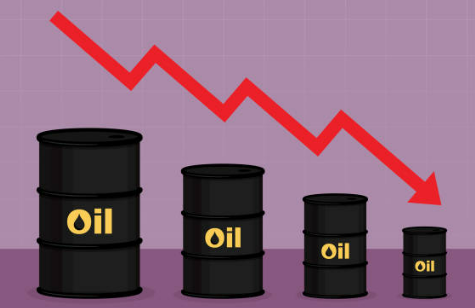
On Tuesday, oil prices retreated from recent gains, with WTI futures hovering around $90, as investors redirected their focus to incoming U.S. inflation data for further monetary policy indicators.


As of 02:02 EST, U.S. Crude Oil WTI Futures declined 0.5% to $90.34, while Brent Oil Futures decreased 0.2% to $96.27. (0000 GMT).


On Monday, amid choppy trading, both contracts rose as much as 3 percent on signs that crude demand remained high in China, the world's largest oil importer.


In July, China's oil imports increased significantly from a four-month low, as additional locations lifted COVID restrictions.


On the heels of dismal factory data, fears of a decrease in Chinese demand pushed oil prices to a six-month low last week, levels not seen since before Russia's invasion of Ukraine.


As a result of the war's ramifications and the COVID-19 pandemic, it is now projected that this year's gasoline prices will be affected by a global recession.


Wednesday's release of U.S. CPI inflation data will likely determine the Federal Reserve's rate rise strategy for the following month.


Given that gasoline prices have decreased from their yearly peak and are a substantial contributor to CPI inflation, it is predicted that the July estimate will be lower than the previous month. The average estimate for yearly growth in July has decreased from 9.1 percent in June to 8.7 percent.


This year, the Federal Reserve has raised interest rates four times and has hinted at further hikes. The central bank has emphasized a data-driven approach to monetary policy tightening, thus the magnitude of its next increase will largely rely on the July and August CPI readings.


Higher interest rates will have a detrimental effect on economic activity and will likely constrain oil consumption. Two straight quarters of economic downturn in the United States have led markets to believe that the nation is presently experiencing a recession.