• English
  • 简体中文
  • 繁體中文
  • Tiếng Việt
  • ไทย
  • Indonesia
Subscribe
Real-time News
Australian Foreign Minister Penny Wong: I met with Japanese Minister of Economic Revitalization Ryoma Akazawa in Tokyo today to discuss joint approaches to energy and fuels. Australia and Japan are committed to maintaining open trade flows between the two countries to support shared energy security.On April 28th, BNP Paribas analysts stated in a research report that regardless of how the situation develops in the coming days or weeks, the Middle East conflict will have a lasting impact on the global economy. The bank currently expects lower global GDP growth, higher inflation, and a more hawkish stance from central banks compared to their initial forecasts. However, they noted that stronger growth momentum prior to the conflict, as well as structural factors such as artificial intelligence and defense spending, may provide support. BNP Paribas projects US GDP growth of 2.4% in 2026, while the Eurozones economic growth is likely to be 1%.On April 28th, the yen strengthened after the Bank of Japan raised its inflation forecast and three committee members supported a rate hike, appreciating as much as 0.3% to 158.97 against the dollar. The number of committee members supporting a rate hike rose to three, up from one at the March meeting, indicating a strengthening hawkish stance within the committee. Uncertainty surrounding the war with Iran and the resulting surge in energy prices are casting a shadow over the economic outlook and becoming a greater concern as the Bank of Japan weighs inflation risks against growth. Masahiko Loo, senior fixed income strategist at State Street Global Advisors, said, "The Bank of Japans hawkish stance should be seen as a signal of both currency defense and inflation control, indicating that the authorities tolerance for further yen weakness is decreasing given the resilience of domestic inflation and growth." The Bank of Japan also raised its core inflation forecast for the current fiscal year to 2.8% and lowered its economic growth forecast to 0.5%. Market focus will shift to Governor Kazuo Uedas press conference for clues on when policymakers might further tighten policy. A hawkish signal from Ueda could push the yen further away from the 160 level. Overnight index swaps indicate that the market expects a 61% probability of a rate hike in June and has fully priced in the expectation of a 25 basis point rate hike in September.Futures News, April 28th: As of April 27th, the mainstream market closing price of benzene in East China was 8650 yuan/ton, up 25 yuan/ton from the previous trading day. Stronger crude oil futures prices boosted market sentiment. Contract traders replenished their inventories on dips, and some downstream buyers stocked up before the May Day holiday, resulting in generally acceptable trading volume. Although negative feedback from downstream companies operating at a loss is intensifying, there has been no immediate adjustment in operating rates, and overall, the bottom support remains relatively strong. With US-Iran negotiations stalled, European and American crude oil futures rose to a two-week high; the market price is expected to remain relatively strong in the short term.On April 28th, Tohru Sasaki, chief strategist at Fukuoka Financial Group and a former Bank of Japan official, stated that the three dissenting votes were precisely the reason for the current yens appreciation. The markets focus is on the CPI, and most members have already raised their inflation expectations, which is another reason why this decision is considered hawkish. The term of dissenting member Junko Nakagawa will expire in June, at which time she will be replaced by a very dovish figure (Ayano Sato). Therefore, this may be the last time we see three dissenting members appearing simultaneously. But regardless, three votes are three votes, so I believe this is a hawkish result.

Commodity Investing: How to Get Started

Larissa Barlow

Mar 25, 2022 17:36

What Is the Definition of a Commodity? 

Commodity is a term that refers to a basic good used in trade that is interchangeable with other similar items. Commodities are frequently utilized as raw materials in the manufacture of other items or services. While the quality of a particular commodity may vary somewhat amongst producers, it is generally uniform. Commodities must also fulfill set minimum requirements, referred to as a base grade, before they may be traded on an exchange.


截屏2022-03-25 下午3.16.27.png

Commodities: An Introduction

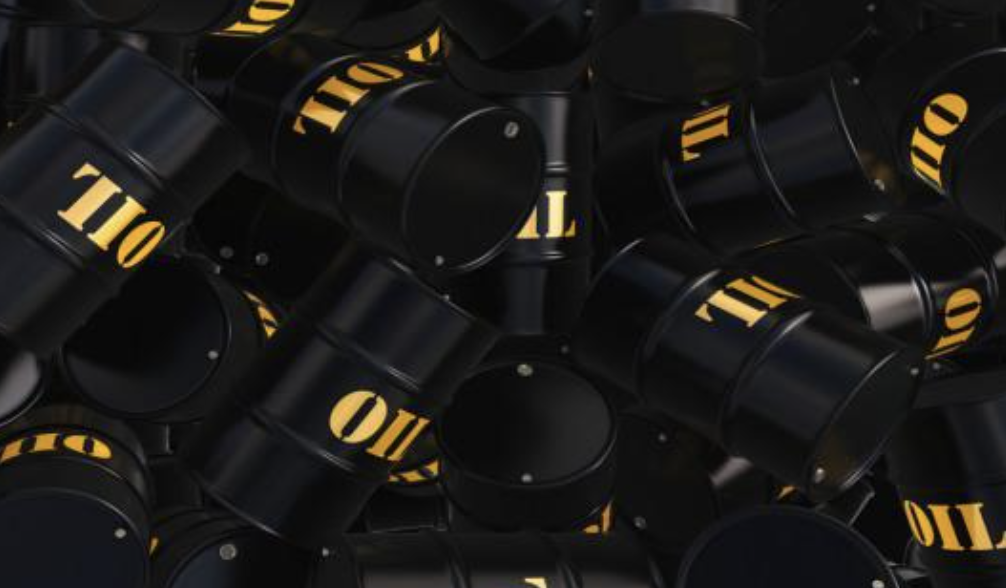
The basic premise is that there is minimal distinction between a commodity produced by one producer and a commodity produced by another. Regardless of the manufacturer, a barrel of oil is essentially the same commodity. In comparison, when it comes to electronics, the quality and functionality of a particular product might vary significantly depending on the manufacturer.


Commodities include wheat, gold, meat, oil, and natural gas. The term has been broadened in recent years to cover financial instruments such as foreign currencies and indices. Technological advancements have also resulted in the introduction of new commodities into the marketplace. For instance, minutes and bandwidth on a cell phone.

Commodity Buyers: There are Several Types

There are two distinct categories of commodity buyers: those that engage in transactions with producers and those who behave as speculators.

Buyers and Manufacturers

Commodities are often sold and purchased via futures contracts on exchanges that regulate the quantity and minimum quality of the commodity being traded. For instance, the Chicago Board of Trade (CBOT) specifies that each wheat contract is for 5,000 bushels and specifies the grades of wheat that may be utilized to fulfill the contract.


Commodity futures traders fall into two categories. The first category includes commodity buyers and producers who utilize commodity futures contracts for the hedging reasons for which they were designed. When the futures contract expires, these traders produce or receive delivery of the underlying commodity.


For instance, a wheat farmer who plants a crop can protect himself from losing money if the price of wheat declines before the crop is harvested. When the crop is sown, the farmer can sell wheat futures contracts, ensuring a set price for the wheat at harvest.

Speculators in Commodities

The speculator is the second sort of commodities trader. These are traders that participate in the commodities markets solely to benefit from the market's erratic price changes. When the futures contract expires, these traders have no intention of producing or taking delivery of the underlying commodity.


Numerous futures markets are extremely liquid and exhibit a high degree of daily range and volatility, which makes them quite attractive for intraday traders. Many index futures are utilized to hedge risk by brokerages and portfolio managers. Additionally, because commodities do not normally trade in lockstep with the equities and bond markets, some commodities may be utilized to diversify an investment portfolio successfully. 

How Are Commodities and Derivatives Related?

The current commodities market is primarily reliant on derivative instruments such as futures and forward contracts. Without the need to exchange real commodities, buyers and sellers may deal simply and in big numbers. Many buyers and sellers of commodity derivatives do so in order to bet on the underlying commodities' price fluctuations for risk hedging and inflation protection objectives.