• English
  • 简体中文
  • 繁體中文
  • Tiếng Việt
  • ไทย
  • Indonesia
Subscribe
Real-time News
April 4th - According to a letter to the European Commission seen by Reuters on Saturday, finance ministers from five EU member states have called for taxes to be levied on the "excessive profits" energy companies have made due to rising fuel prices caused by the war with Iran. The finance ministers of Germany, Italy, Spain, Portugal, and Austria made this appeal in a joint letter, stating that this move would send a signal that "we are united and capable of taking action." It would also send a clear message that those who profit from the war must bear their due responsibility for alleviating the burden on ordinary people.According to Reuters, the finance ministers of Germany, Italy, Portugal, Austria, and Spain have called for a windfall profits tax on energy companies.April 4th - According to CNN, as the Middle East conflict enters its second month, the oil shortage crisis risks escalating into a worse situation – shortages of almost everything. The conflict has severely restricted oil and gas transport through the Strait of Hormuz, reducing global supply by about one-fifth. This disruption has not only driven up fuel prices but also squeezed the supply of petrochemical products needed to manufacture everyday items such as shoes, clothing, and plastic bags. As prices for materials like plastics, rubber, and polyester rise, this pressure is spreading to every corner of the consumer market. Asia is currently the most affected, home to more than half of the worlds manufacturing and heavily reliant on imported oil and other commodities. Dan Martin, co-head of business intelligence at Deloitte Touche Tohmatsu, stated that this will very, very quickly impact all goods, such as beer, noodles, potato chips, toys, and cosmetics, because plastic bottle caps, shipping pallets, snack bags, and containers are becoming increasingly difficult to procure. Martin added that adhesives used in footwear and furniture, industrial lubricants for machinery, and solvents used in paints and cleaning processes also rely heavily on petroleum-derived products.On April 4th, the Israel Defense Forces (IDF) issued a statement saying that on April 3rd, the IDF conducted airstrikes on multiple targets in Tehran, the Iranian capital. The statement said the strikes targeted several key Iranian infrastructure sites, including an Iranian Islamic Revolutionary Guard Corps (IRGC) air defense facility storing missiles used to engage aerial targets. The statement also said the IDF attacked a military base responsible for protecting Iranian weapons research and development facilities. Additionally, it struck a ballistic missile storage site and several weapons production and research facilities. Iran has not yet responded to the attacks.The governor of Rostov Oblast, Russia, said that businesses in the southern Russian city of Tolyat were attacked by Ukrainian drones.

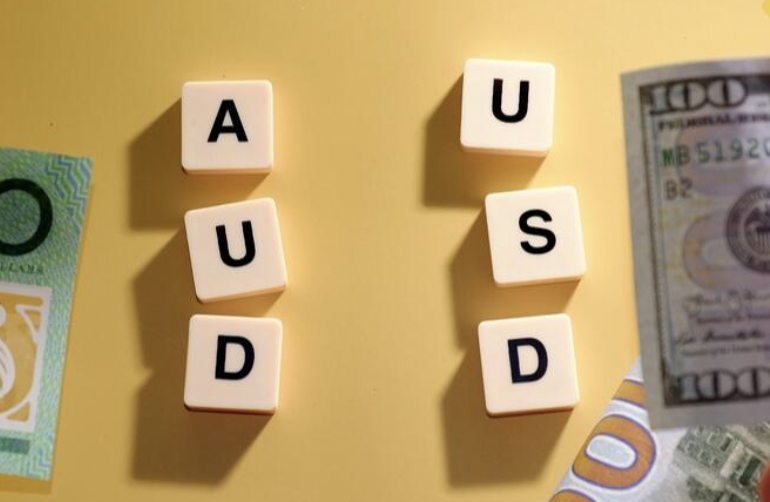
As Australia's retail sales continue to climb, the AUD/NZD pair has remained steady over 1.1400

Alina Haynes

Sep 28, 2022 14:53

截屏2022-09-28 上午10.05.01.png 


Australia's Retail Sales on Wednesday morning favored buyers, keeping the AUD/NZD high at 1.1430. By doing so, the cross-currency pair is ignoring bad news out of China and recession worries, and is instead pushing toward Monday's nine-year high.


The Australian currency (AUD) appreciated as a result of the 0.6% month-over-month increase in retail sales in Australia, which beat both the 0.4% forecast and the 1.2% increase seen in the previous month (RBA).


The latest statements made by Reserve Bank of New Zealand (RBNZ) Governor Adrian Orr and New Zealand's Finance Minister (FinMin) Grant Robertson on Tuesday also supported AUD/NZD buyers.


RBNZ governor Orr said the central bank still had some work to do, but that the tightening cycle was reasonably far along. Following in his footsteps are "As of right now, the worldwide economy is a tough place to be. The crisis in Ukraine and other issues in Europe and China are obvious examples." During an interview with New Zealand's government-run TVNZ, Grant Robertson, the country's finance minister, reportedly made the following remarks, as reported by Reuters.


The AUD/NZD bulls appear to be facing the strongest pressure from apprehensions about the European energy crisis and China's zero-covid policy. The World Bank's (WB) gloomy economic forecasts for China and allegations that the dragon nation invited important market players to safeguard stocks revealed cracks in the economy of Australia's biggest customer.