• English
  • 简体中文
  • 繁體中文
  • Tiếng Việt
  • ไทย
  • Indonesia
Subscribe
Real-time News
1. All three major U.S. stock indexes closed lower. The Dow Jones Industrial Average fell 1.76% to 48,488.59 points, the S&P 500 fell 2.06% to 6,796.86 points, and the Nasdaq Composite fell 2.39% to 22,954.32 points. 3M fell nearly 7%, and IBM fell more than 4%, leading the Dows decline. The Wind U.S. Tech Big Seven Index fell 3.06%, with Nvidia and Tesla falling more than 4%. Most Chinese concept stocks fell, with Jinko Solar falling more than 12% and 21Vianet falling more than 10%. The S&P 500 recorded its biggest drop since October. 2. All three major European stock indexes closed lower. The German DAX fell 1.08% to 24,689.67 points, the French CAC40 fell 0.61% to 8,062.58 points, and the UK FTSE 100 fell 0.67% to 10,126.78 points. 3. Most major Asia-Pacific stock indexes closed lower. The Nikkei 225 index fell 1.11% to 52,991.1 points, marking its fourth consecutive day of decline. Escalating tensions between the US and Europe, rising yields on Japanese long-term government bonds, and concerns about fiscal deterioration weighed on the stock market. The South Korean KOSPI index fell 0.39% to 4,885.75 points, ending a 12-day winning streak, with semiconductor and auto stocks declining. US Treasury yields rose across the board: the 2-year yield rose 1.68 basis points to 3.595%, the 3-year yield rose 3.35 basis points to 3.678%, the 5-year yield rose 5.10 basis points to 3.857%, the 10-year yield rose 7.94 basis points to 4.293%, and the 30-year yield rose 8.85 basis points to 4.920%. 5. International precious metals futures generally closed higher. COMEX gold futures rose 1.98% to $4,769.10 per ounce, and COMEX silver futures rose 0.19% to $94.46 per ounce. 6. The WTI crude oil futures contract closed up 0.15% at $59.52 per barrel; the Brent crude oil futures contract fell 0.06% to $63.9 per barrel. 7. Most London base metals declined. LME copper fell 1.3% to $12,796.5 per tonne, LME zinc fell 1.44% to $3,175 per tonne, LME nickel fell 2.06% to $17,760 per tonne, LME aluminum fell 1.27% to $3,118.5 per tonne, LME tin rose 0.8% to $49,650 per tonne, and LME lead fell 1.58% to $2,028 per tonne.January 21st - Market concerns about a significant increase in Japanese government spending and a resurgence of inflation are causing a break in the traditional correlation between the yen and the dollar and government bond yields, prompting HSBC strategists to change their forecasts for the yens performance in the coming months. HSBC analysts believe there are two catalysts for the current "sudden revaluation" of the yen: first, a substantial rise in Japanese inflation starting in 2022; and second, Sanae Takashis inauguration as president in October. HSBC now predicts the yen will fall to 160 yen to the dollar by mid-year, rather than strengthening to 150 yen as previously expected. Strategists point out that complicating matters is the real possibility that Japanese authorities might intervene in the foreign exchange market to support the yen if it falls below 160. Analysts believe several potential factors could halt the yens recent decline—the most plausible of which (such as a slowdown in the US economy) is beyond the control of Japanese policymakers.Pan American Silver (PAAS.O): Equity silver production is projected to be between 25 million and 27 million ounces in 2026, and equity gold production is projected to be between 700,000 and 750,000 ounces in 2026.Netflix (NFLX.O) CFO: The company is seeing a range of very attractive investment opportunities and plans to "slightly" increase spending this year. This years spending growth will be higher than in 2025.According to US media MS NOW, US Vice President Vance will hold a roundtable meeting with leaders from various sectors in Minneapolis.

Samsung Electric Will Join The Renewable Energy Promise As South Korea Focuses on Green Energy

Aria Thomas

Apr 27, 2022 09:53

S2.png


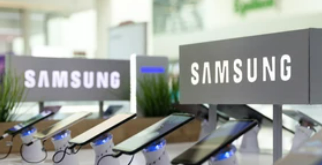
Samsung (KS:005930), the world's biggest chipmaker, is late to the green power pledge: It's been two years since hometown rival SK Hynix joined the RE100 initiative, which sets a 2050 target for 100% renewable electricity, while global peers including Apple, TSMC and Intel (NASDAQ:INTC) are already among its 350 members.


The timing of the cautious company's announcement, expected as early as the May 10 inauguration of South Korea's new president, will bring it on board just as the country's energy policy is set for a grand U-turn: away from the prior administration's aggressive push into renewables, and towards a pro-nuclear stance.


"It will be a group-wide announcement that also includes affiliates such as Samsung Display," said a person with direct knowledge of the matter.


"The entire group will announce its climate goals including RE100 around when the new administration kicks off," the source said, asking not to be identified due to the sensitivity of the issue.


The source added that Samsung had discussed with President-elect Yoon Suk-yeol's transition committee the regulations and hurdles that discourage the use of renewable energy.


Samsung declined to comment, while the CDP, an environmental non-profit organization that brings together companies seeking to join RE100, said only that an announcement was expected this year.


"Samsung Electronics told us that it has notified its foreign investors that it would join and announce RE100 within this year," Kim Tae-han, a senior researcher at the CDP Korean committee, told Reuters.


Yoon has also tapped Han Hwa-jin, a climate specialist and outside director at Samsung, to serve as his government's environment minister.


The timing of Samsung's RE100 announcement could depend in part on the appointment of Han's replacement on the board.


"Samsung needs the legitimacy of all outside directors being present and approving the announcement," said Lee Jong-oh, director at Korea Sustainability Investing Forum.

RISK OF INACTION

Samsung has long acknowledged the risk of inaction on climate change, estimating based on 2020 revenue that up to 25.8 trillion won ($20.6 billion), or 20%, of its business-to-business sales such as chips could be lost if it does not switch to renewable energy.


"Our customers are demanding to produce products using 100% renewable energy to achieve their goals. There is an evident risk that our sales may be affected if these demands are not met," Samsung said in a statement posted on CDP's website in 2021.


It's not just B2B customers like Apple, which buys its chips, or consumers who buy its Galaxy smartphones who are concerned about Samsung's action on climate.


BlackRock (NYSE:BLK), the fourth-largest institutional investor in Samsung according to Eikon data, said in a voting bulletin at its annual shareholders' meeting last month that investors had only limited access to information on Samsung's green strategies. It also criticized the board for a lack of urgency on climate issues.


Samsung Electronics has already been running its chip factories in China and the United States 100% with renewable electricity since 2019, but they accounted for just 10.7% of its total global energy consumption in 2020.


Its chip factories in South Korea accounted for 63.5% of its total global electricity use in 2020, and most of its $51.6 billion in profit last year, but ran almost entirely on non-renewable power.


It is building its third chip factory in Pyeongtaek, South Korea, and three more are planned for the city. Once completed, they are projected to consume 21.6 TWh per year, exceeding the entire electricity consumption of Busan, South Korea's second-largest city with 3.3 million people, according to an opposition lawmaker. Samsung did not dispute the figure.


This raises the stakes for Samsung's profitability in South Korea's energy policy.


While environmental groups have argued that an aggressive shift to renewables is necessary to promote economies of scale, Sonn Yang-hoon, an economics professor at Incheon National University, said Yoon's more cautious, pro-nuclear approach would help to stabilise electricity prices and let Samsung sustain profitability while moving towards renewables.


"Nuclear power will buy time until renewable energy gets cheaper with technological breakthroughs," Sonn said. "Samsung will bide its time until renewable energy prices drop before it carries out RE100 at full throttle."


The Korea Energy Economics Institute estimates the price of solar and wind power will fall as much as 55% and 44%, respectively, by 2030 from 2020.


Yoon, who won the March 9 presidential election by the smallest margin in South Korea's democratic history, aims for an energy mix of 20-25% renewables and 30-35% nuclear by 2030, compared with his predecessor's target of 70% from renewables and only 6% from nuclear by 2050.


Nuclear power accounted for 29% and renewable energy 6.6% in 2020, Electric Power Statistics Information System data showed.