• English
  • 简体中文
  • 繁體中文
  • Tiếng Việt
  • ไทย
  • Indonesia
Subscribe
Real-time News
On July 14th, the Aftermarket Branch of the China Association of Automobile Manufacturers issued a clarification statement, stating that some media outlets recently cited data from the branchs "2025 China Automotive Aftermarket Annual Development Report," publishing reports such as "the average age of new energy vehicles is only 1.8 years, and consumers replace their vehicles with electric vehicles every 3-5 years," which has led to market misunderstandings. The Aftermarket Branch clarified the key distinction: "Average age of vehicles in use" ≠ "Vehicle replacement cycle" ≠ "Average lifespan of vehicles." The "average age of vehicles in use" published in the report specifically refers to the average time it takes for existing new energy vehicles in my country to be sold by the end of 2025, equivalent to the average age of a person, not the average lifespan. "Vehicle replacement cycle" refers to the average interval between purchase and voluntary replacement, while "average lifespan of vehicles" is the average number of years a vehicle is used from its initial sale to its scrapping. These three terms have completely different statistical methods and objects. The conclusion drawn from the online reports regarding "rapid replacement of electric vehicles" is inaccurate and represents a misuse of statistical concepts. For specific data on "vehicle replacement cycle" and "average vehicle lifespan", please refer to official statistics or other authoritative industry reports and research conclusions.July 14th - According to Visible Alpha data, ASML (ASML.O) is expected to report second-quarter sales of €8.83 billion (approximately $10.08 billion). This forecast falls within the companys previous guidance range of €8.4 billion to €9 billion and is higher than the €7.69 billion in the same period last year. Of particular note is ASMLs performance guidance and the issue of tight market supply. Driven by strong semiconductor demand, ASML is expected to raise its full-year sales forecast for the second time this year. UBS analysts stated that ASML may raise its guidance to the high end of the range, or even slightly above it. JPMorgan Chases Sandeep Deshpande also indicated that ASML may raise its guidance again, citing strong shipments of deep ultraviolet lithography machines. Furthermore, ASML CEO Christophe Fouquet stated in April that investment in AI infrastructure is creating a situation where chip demand exceeds supply. Companies are unable to obtain sufficient memory and storage chips because AI demand has pushed costs to the point that Apple had to raise prices on some products. Micron Technology executives stated last month that the supply shortage will continue beyond 2027. Investors will be closely watching any comments from ASML executives regarding AI demand and its future trends.On July 14, 2026, Wang Yi, member of the Political Bureau of the CPC Central Committee and Foreign Minister, held talks in Beijing with Honipwera, Minister of Foreign Affairs and Foreign Trade of the Solomon Islands. Wang Yi stated that Chinas cooperation with the Solomon Islands is free of political conditions, impositions, and empty promises. He expressed Chinas willingness to strengthen the alignment of development strategies, promote high-quality Belt and Road cooperation, expand practical cooperation in areas such as green energy, broaden people-to-people exchanges in education, health, and youth, strengthen multilateral cooperation, uphold international fairness and justice, and jointly address global challenges such as climate change. Honipwera stated that the Solomon Islands highly values its relations with China, which is its largest trading partner. The two sides have reached dozens of memorandums of understanding on cooperation and look forward to expanding trade and investment with China, deepening practical cooperation in education, infrastructure, healthcare, and green development, and elevating Solomon Islands-China relations to a higher level.German Ministry of Economic Affairs: Corporate bankruptcy rate remains unusually high.Market news: The European Council has finally approved the revised trade agreement with Mexico.

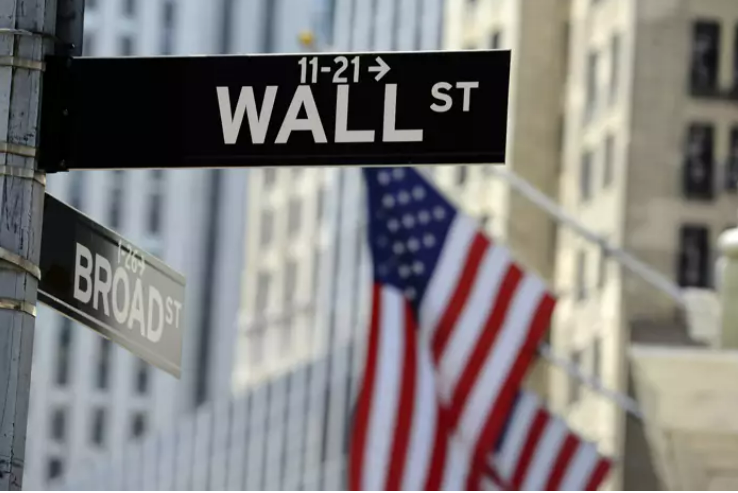
S&P 500 Retreats From Session Highs Amid Rising Geopolitical Tensions

Cory Russell

Nov 16, 2022 17:27


With rising geopolitical tensions, traders profit

Several missiles that landed in Poland and killed at least two individuals caused the S&P 500 to retreat from session highs. A committee on national security and defense matters was invited to an urgent meeting by Poland. Poland hasn't yet stated what it intended to talk about. It is clear that Poland will assess whether these missiles originated from Russia, which today carried out significant strikes against the energy infrastructure of Ukraine.


Poland is a NATO member, therefore the possible escalation of geopolitical tensions is taken into account by the markets. It is not unexpected that traders swarmed to purchase safe-haven assets. The US Dollar Index recovered some of its losses and moved closer to the 107 level. As the demand for safe haven assets increased, gold also found support and reclaimed the $1775 mark.


The price of WTI oil increased toward the $88 mark as Hungary convened its security council to discuss Ukraine's decision to halt oil transit from Russia via the "Druzhba" pipeline. These developments might give oil stocks a lot of support in the coming days.


Putting geopolitics aside, the market has been upbeat today as a result of Walmart's presentation of solid third-quarter results, revised expectations, and $20 billion repurchase program.


Whether the current geopolitical developments will have an impact on the U.S. stock market is the main concern. Following the recent rally, some traders might want to lock in profits in the near future.


In the long run, the suspension of Russian oil exports to Hungary could be a major issue and boost the oil market as the G7 nations get ready to cap the price of Russian oil. Higher oil prices increase inflation, which might make the Fed more hawkish and damage stocks.