• English
  • 简体中文
  • 繁體中文
  • Tiếng Việt
  • ไทย
  • Indonesia
Subscribe
Real-time News
May 4th - According to a report by Irans Nokari News Agency on the evening of May 3rd, data from the maritime information company "Tanker Tracker" website shows that 25 oil tankers carrying crude oil left Iran in April, some of which have already reached their destinations. The report stated that seven tankers returned to Iran in the Arabian Sea due to a US blockade, two were seized by the US in the Indian Ocean, and one sailed to the Far East. Of the remaining 15 tankers, most arrived at their destinations in the first half of April.U.S. 10-year Treasury futures rose 5 points, and 30-year Treasury futures rose 8 points.U.S. Republican Senator Lindsey Graham: I fully support President Trump’s decision to launch the “Freedom Initiative” aimed at restoring freedom of navigation in the Strait of Hormuz, a vital passage to the global economy that has been blocked by Iranian “terrorism.”① Iran 1. Iranian Foreign Ministry Spokesperson: Trumps boasting of acting like a "pirate" is a direct admission of crime. 2. An Iranian supertanker "evaded" US Navy tracking and is heading towards the Riau Islands of Indonesia. 3. Iranian official: Iran is studying more than eight alternative trade routes or channels. 4. Iran says all traffic in the Strait of Hormuz must obtain Iranian permission. 5. Foreign Affairs Advisor to Irans Supreme Leader: Trumps recent words and actions cannot hide the "shattering of White House illusions." 6. Manager of the National Iranian Oil Company: Despite the threats, we drilled thousands of oil wells and reservoirs during the war to maintain production and exports. 7. Iran is reviewing the US response to the 14-point proposal and is not currently conducting nuclear negotiations. ② United States 1. US media reports that Iran is not demanding the lifting of the Strait of Hormuz blockade before direct negotiations. 2. Acting US Attorney General: Trumps statement that military action in Iran is not war is correct, and the claim that it is illegal is invalid. 3. Trump stated in an interview that Irans new proposal is unacceptable. 4. Witkov stated that Washington is currently in dialogue with Iran. Iran has not yet responded. 5. Trump: Operations to guide ships stranded in the Strait of Hormuz out of the Strait will begin Monday (Middle East time), noting that US representatives are actively consulting with Iran. 6. US media: Sources say the US submitted a revised draft agreement on Sunday aimed at ending the war, in response to the latest proposals from Iranian officials. ③ Israel 1. Israel approves plan to purchase new fighter jets from the US. 2. The Israeli military claims the earlier rocket attack in northern Israel was a miscalculation. 3. Israeli Prime Minister: An additional 350 billion shekels will be allocated to the Israeli defense budget over the next ten years for domestic ammunition production. 4. The Israeli Prime Minister ordered all government ministers not to give media interviews on Iran. ④ Strait of Hormuz 1. US Treasury Secretary Bessant: Irans attempts to collect tolls for ships have had little effect; he is not surprised by the increased number of ships passing through the Strait of Hormuz. ⑤ Ceasefire Negotiations 1. Media reports reveal details of Irans latest negotiation plan, which includes three phases. The first phase includes "transforming the ceasefire into a full ceasefire within 30 days." ⑥ Other situations: 1. Israeli airstrikes in southern Lebanon resulted in 8 deaths and 11 injuries. 2. Mertz stated that the US troop reduction in Germany was unrelated to his remarks regarding the war with Iran.The British government is prepared to begin consultations on joining the EUs £78 billion loan program for Ukraine.

Oil Prices Fall Due to U.S. Rate Hikes And China

Haiden Holmes

Nov 18, 2022 11:44

119.png


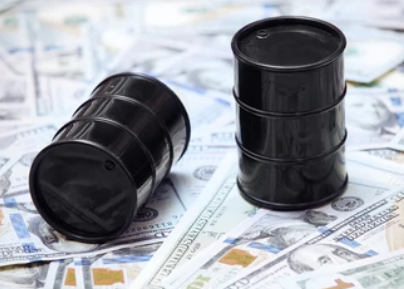
On Thursday, oil prices fell by more than 3% as mounting COVID-19 cases in China and anticipation of more aggressive U.S. interest rate hikes impacted demand.


Brent crude fell $3.08 per barrel, or 3.3%, to close at $89.78 per barrel. The price per barrel of U.S. West Texas Intermediate (WTI) crude oil decreased by $3.95, or 4.6%, to $81.64.


Dennis Kissler, senior vice president of trading at BOK Financial, commented, "It's equivalent to a triple whammy: an increase in COVID-19 cases in China, rising interest rates in the U.S., and now technical weakness in the market."


President of the Federal Reserve Bank of St. Louis, James Bullard, claimed that a basic monetary policy rule would need interest rates to increase to at least 5%, while stronger assumptions would require rates to exceed 7%.


As investors reviewed U.S. economic data, the value of the dollar rose. The price of oil priced in dollars increases for holders of other currencies when the dollar strengthens.


China reported daily rises in COVID-19 infections, and Chinese refiners allegedly sought a decrease in Saudi crude exports in December, while crude purchases from Russia stalled.


Despite the fact that China has fewer COVID instances than other countries, the world's largest importer of petroleum maintains strict regulations to control early outbreaks, hence cutting gasoline use.


On the basis of technical indicators, U.S. front-month futures fell below the 50-day simple moving average, leading to fund liquidation, Kissler said, adding that he expects the pressure to persist into the start of the next week.


Phil Flynn, an analyst at Price Futures Group, stated, "The market is becoming acutely aware of the potential for massive demand destruction, and sentiment is clearly swinging to the downside."


Wednesday, Poland and NATO declared that a missile that landed in their country was likely a stray shot by Ukraine's air defenses and not a Russian strike, assuaging fears that the Russia-Ukraine confrontation may intensify.


Craig Erlam, a senior market analyst at OANDA, stated, "Thank god, these concerns have abated and the situation has deescalated, resulting in oil price declines." China is an immediate downward risk for oil.


According to government statistics, oil stockpiles in the United States decreased by more than 5 million barrels in the most recent week. [EIA/S]


As OPEC and its allies, often referred to as OPEC+, implement their most recent output cuts to boost the market, the November supply is also tightening.