• English
  • 简体中文
  • 繁體中文
  • Tiếng Việt
  • ไทย
  • Indonesia
Subscribe
Real-time News
Bank of England Chief Economist Peel: We need to continue to focus on the "last mile".On February 6th, the Peoples Bank of China and eight other departments issued a notice on further preventing and handling risks related to virtual currencies. The notice states that real-world asset tokenization refers to the activity of using encryption technology and distributed ledger or similar technologies to convert the ownership and income rights of assets into tokens or other rights or bond certificates with token characteristics, and then issuing and trading them. Conducting real-world asset tokenization activities within China, as well as providing related intermediary and information technology services, which are suspected of illegal token issuance, unauthorized public offering of securities, illegal operation of securities and futures businesses, illegal fundraising, and other illegal financial activities, should be prohibited; exceptions are made for related business activities conducted based on specific financial infrastructure with the approval of the competent authorities in accordance with laws and regulations. Foreign entities and individuals are prohibited from illegally providing real-world asset tokenization-related services to domestic entities in any form.On February 6th, eight departments, including the Peoples Bank of China, issued a notice on further preventing and handling risks related to virtual currencies. The notice states that strict supervision will be implemented for domestic entities conducting related business overseas. Without the consent of relevant departments in accordance with laws and regulations, domestic entities and their controlled overseas entities are prohibited from issuing virtual currencies overseas. Domestic entities directly or indirectly conducting real-world asset tokenization business in the form of foreign debt overseas, or conducting asset securitization or equity-based real-world asset tokenization business overseas based on domestic asset ownership, income rights, etc. (hereinafter collectively referred to as domestic equity), should be strictly supervised by the National Development and Reform Commission, the China Securities Regulatory Commission, the State Administration of Foreign Exchange, and other relevant departments according to their respective responsibilities, following the principle of "same business, same risk, same rules." Overseas subsidiaries and branches of domestic financial institutions providing real-world asset tokenization services overseas should act prudently and legally, equip themselves with professional personnel and systems, effectively prevent business risks, strictly implement customer access, suitability management, anti-money laundering requirements, and incorporate them into the compliance and risk control management system of domestic financial institutions.On February 6th, eight departments, including the Peoples Bank of China, issued a notice on further preventing and handling risks related to virtual currencies. The notice mentioned the continued crackdown on virtual currency mining activities. The National Development and Reform Commission, together with relevant departments, will strictly control virtual currency mining activities and continue to promote the rectification of such activities. Provincial-level peoples governments are fully responsible for the rectification of mining activities within their respective administrative regions. In accordance with the requirements of the "Notice on Rectifying Virtual Currency Mining Activities" (NDRC Operation [2021] No. 1283) issued by the National Development and Reform Commission and other departments, and the provisions of the "Guidance Catalogue for Industrial Structure Adjustment (2024 Edition)," they will comprehensively review, investigate, and shut down existing virtual currency mining projects, strictly prohibit new mining projects, and strictly prohibit mining machine manufacturers from providing mining machine sales and other services within the country.On February 6th, the Peoples Bank of China and eight other departments issued a notice (Yinfa [2026] No. 42) on further preventing and handling risks related to virtual currencies. The notice clarifies the essential nature of virtual currencies, the tokenization of real-world assets, and related business activities. Virtual currencies do not have the same legal status as fiat currency. Bitcoin, Ethereum, Tether, and other virtual currencies are characterized by being issued by non-monetary authorities, using encryption technology and distributed ledgers or similar technologies, and existing in digital form. They lack legal tender status and should not and cannot be used as currency in the market.

MasterCard To Enter the Crypto World With NFTs After VISA & AmEx

Skylar Shaw

Apr 12, 2022 10:38


微信截图_20220412102448.png


  • MasterCard aims to take a full-throttle approach in the Metaverse, including NFT, educational, and payment services.


  • AmEx, too, recently exposed its virtual world aspirations by submitting trademark applications.


  • Apart from businesses, trademark applications were also made by exchanges such as the NYSE.


MasterCard will cover anything from Metaverse events to NFTs, tech, and other general interests, according to Trademark/Service Mark Applications filed with the United States Patent and Trademark Office.

MasterCard Joins the Metaverse

In addition to financial services, the company will provide entertainment and educational services in the Metaverse, as well as extend its offerings to include additional social, cultural, and community activities.


MasterCard may be seeking to deliver its financial services to people in the virtual world through the Metaverse.


MasterCard has submitted an application to trademark its characteristic yellow and red dots, which will be visible on virtual credit, debit, and payment cards, according to another document.


MasterCard hopes to promote the usage of its cards for transactions in the virtual world by doing so.


For as long as the hype remains, it is commonly known that the Metaverse is primarily undiscovered terrain with monetary worth. However, considering the high-profile brands that have already joined the market, it is possible that it will survive for a long time.


MasterCard might benefit as a prominent financial services provider in a market where LAND parcels may sell for as much as $10,000.


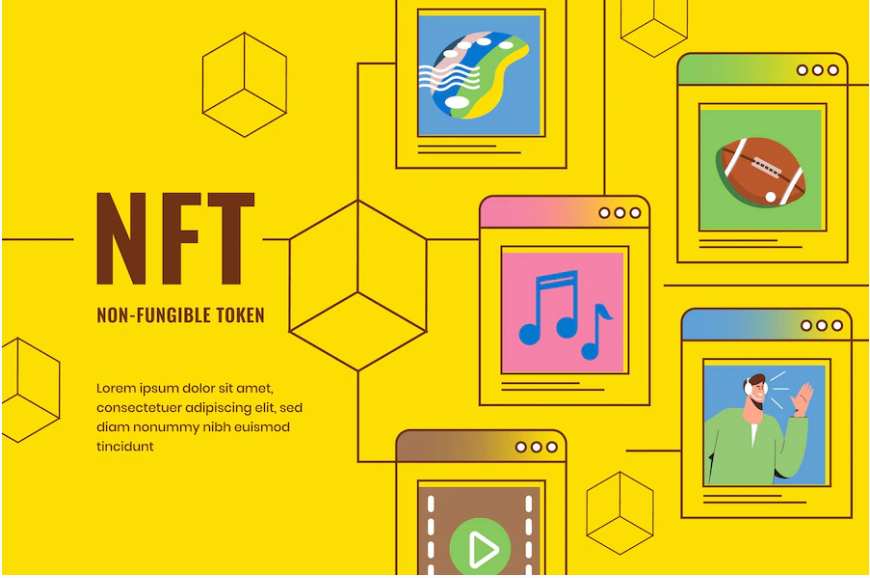
However, the business will tackle NFTs in a way that isn't limited to Metaverse services. "Downloadable music files authenticated by non-fungible tokens (NFTs); downloadable multimedia files comprising artwork, text, audio, and video authenticated by non-fungible tokens (NFTs)," according to the same filing.


The "PRICELESS" branding will be applied to these NFTs, as has been the company's advertising effort since 1997.


Other large public firms and even exchanges are prepared to join the virtual world, and MasterCard is not the only one to do so.

Others Waiting in Line

The New York Stock Exchange (NYSE) quickly filed identical proposals to extend to NFTs and Metaverse, focused on digital currencies and virtual retail outlets.


KFC, Pizza Hut, and Taco Bell, for example, used this strategy to announce their debut into the Metaverse.


At this time, it seems like the Metaverse is being used more as a marketing technique than as an alternative to the actual world by everyone and everyone who can.