• English
  • 简体中文
  • 繁體中文
  • Tiếng Việt
  • ไทย
  • Indonesia
Subscribe
Real-time News
July 3rd - According to CNBC, US President Trump stated on Thursday that AI investment is "larger" than the internet construction of the late 1990s, and total capital expenditure matches this assertion. Goldman Sachs estimated in 2025 that AI capital expenditure would need to reach $700 billion by 2026 to match the peak spending levels of the telecommunications construction boom in the late 1990s. The investment bank predicted in May that AI capital expenditure would reach $765 billion this year and is expected to grow to $1.6 trillion annually by 2031. Regarding chips, Trump stated that he predicts 40% to 60% of chip manufacturing will be located in the United States by the time he leaves office.US President Trump: Micron Technology (MU.O) is a "hot company" run by a "great person".US President Trump: I think Musk will donate SpaceX (SPCX.O) stock to the "Trump account".US President Trump: Venezuela has performed "better than ever" in terms of oil, and my policies have helped restore the countrys energy output.July 3 – According to CNBC, US President Donald Trump on Thursday refused to commit to signing a bipartisan housing bill—which had easily passed Congress more than a week earlier—and instead turned his attention to a controversial election bill, the so-called Protect America Act. Trump stated that he would not sign the housing bill until Congress presented it to him for his signature. "I think the Protect America Act is the most important bill we have right now, and for years to come," Trump said. The bill would require voters to show photo identification when voting and to provide proof of citizenship when registering to vote. Regarding the housing bill, Trump said, "There are a lot of provisions in it that the Democrats put forward, and I even think theyre not right, but thats okay. But Ive made my position clear: Id rather not sign any bill until I sign the Protect America Act."

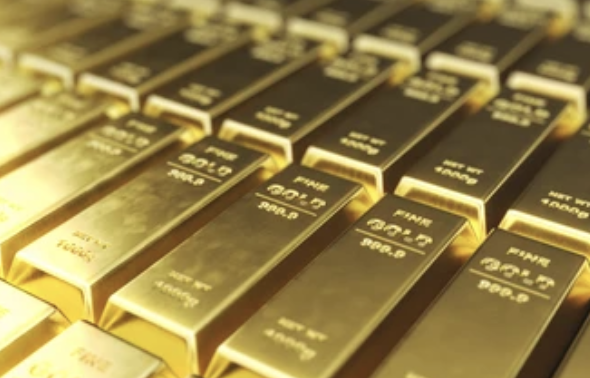
Forecast for the price of gold: XAU/USD advances toward $1,800 on a decline in consensus for US inflation

Daniel Rogers

Aug 09, 2022 15:19

 截屏2022-07-29 上午11.06.12.png


The price of gold (XAU/USD) has slowed down since reaching a peak over $1,790.00 during the Asian session. After a sharp rally, the precious metal is stabilizing in a higher market profile but the upward energy has not yet been exhausted. On the back of reduced projections for the US Consumer Price Index, the shiny metal is moving closer to the psychological resistance level of $1,800.00. (CPI).


According to market expectations, the US Consumer Price Index (CPI) will drop from its previous release of 9.1 percent to 8.7 percent. The consensus has decreased by 40 basis points, which is supported by the recent decline in oil prices. On account of growing recessionary fears and diminishing supply concerns, black gold lost its luster. This may encourage the Federal Reserve (Fed) to set interest rates a little lower this time.


Investors should be aware that a temporary decrease in price pressures does not signify that the Federal Reserve's (Fed) difficult work is finished. For the inflation rate to assert that the price pressures have subsided, a string of downward changes must be visible.


After receiving bids in the lower part of the Rising Channel that was established on a four-hour scale, gold prices have significantly recovered. The upper part of the aforementioned chart pattern is drawn from the high of July 22 at $1,739.37, and the lower part is drawn from the low of July 27 at $1,711.55.


The 20-period Exponential Moving Average (EMA) at $1,775.50 has been held by the bulls in gold. Although there has been a correction, the 50-EMA at $1,767.11 has held steady, showing that the short-term trend is incredibly optimistic.


Additionally, the Relative Strength Index (RSI) (14) has made an attempt to break above 60.00; if this is successful, it will support gold bulls even more.