• English
  • 简体中文
  • 繁體中文
  • Tiếng Việt
  • ไทย
  • Indonesia
Subscribe
Real-time News
Joint statement from the UK, Switzerland, France, Germany, and the Netherlands: We and our partners will use all policy tools at our disposal to continue to hold Russia accountable.Joint statement from the UK, Switzerland, France, Germany, and the Netherlands: We further express our concern that Russia has not destroyed all of its chemical weapons.The United Kingdom, Sweden, France, Germany, and the Netherlands issued a joint statement regarding the death of Alexei Navalny.NATO Secretary General Rutte: NATO is so powerful that "Russia will not attempt to launch an attack."On February 14th, Chinese Foreign Minister Wang Yi, speaking at the Munich Security Conference in Germany, addressed China-US relations, pointing out two possible scenarios. One is that the US objectively and rationally understands China, pursues a positive and pragmatic policy towards China, and works with China to continuously expand common interests, leading to future cooperation between the two countries. This would undoubtedly be of great benefit to both China and the US, as well as the world. The other scenario is that the US decouples from China, opposes anything related to China, forms various cliques and groups targeting China, and even incites or plots Taiwan independence and the division of China, crossing Chinas red lines. This would lead to confrontation between China and the US. History progresses through twists and turns, and the future of China-US relations is bright. The vision and principles of mutual respect, peaceful coexistence, and win-win cooperation will ultimately be realized, because this is the only correct choice.

Fidelity To Offer Digital Asset Investment as Part of Retirement Plans

Cory Russell

Apr 27, 2022 10:14

Fidelity will soon allow customers to invest in Bitcoin as part of their retirement plans.


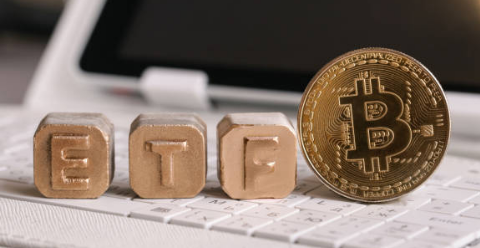
The company also introduced a crypto payments ETF and a Metaverse ETF this month.


In the European market, the business has launched the world's lowest Bitcoin ETP.


Most people choose to put their money into safe options that are government regulated, centrally held, and stem from classic finance options when it comes to investment plans.


The mainstreaming of cryptocurrencies into the financial sector has changed that, with organizations like Fidelity now selling cryptocurrency for investment to the general public.

Before You Retire, Invest in Bitcoin

Fidelity Investments, the largest provider of 401(k) plans in the United States, has announced that it will soon provide the option of investing in Bitcoin and, eventually, other cryptocurrencies. However, the decision is made at the discretion of the employers.


"We started to hear a rising interest from plan sponsors, organically, as to how could Bitcoin or how could digital assets be offered in a retirement plan," Dave Gray, the Head of Workplace Retirement Offerings and Platforms at Fidelity Investments, said in an interview with The New York Times.


As a result, they introduced this option, allowing individuals to invest directly in Bitcoin and other assets without having to create a separate account on a cryptocurrency exchange.


However, Fidelity will charge between 0.75 percent and 0.9 percent in fees for each Digital Asset Account. Furthermore, a new trading fee will be applied, which the business has not yet disclosed but is expected to be "competitively priced."


MicroStrategy has already signed up for this service, according to Gray, the largest public Bitcoin holder, which isn't surprising given that Michael Saylor is essentially establishing the company on the back of Bitcoin.


This news follows Fidelity's revelation that it is attempting to make inroads into the crypto market with its offerings.


Fidelity International has announced the debut of its spot Bitcoin exchange-traded product (ETP) in Europe, which is also the world's cheapest Bitcoin ETP, with a total expense ratio (TER) of 0.75 percent.


Fidelity Investments recently developed a Crypto Industry and Digital Payments ETF (FDIG) and a Metaverse ETF (FMET) to appeal to a younger audience.