• English
  • 简体中文
  • 繁體中文
  • Tiếng Việt
  • ไทย
  • Indonesia
Subscribe
Real-time News
On August 29th, NBC News, citing two sources familiar with the matter, reported that US Defense Secretary Peter Hegseth has been discussing the possibility of running for president in 2028 with close associates in recent months. Hegseth and his wife believe he shares some similarities with Trump, including a tough, confrontational style and conservative stances on social issues, which could garner support from the MAGA base. This month, Hegseth also traveled to Iowa to campaign for Republican lawmakers. Iowa has long been a key outpost in US presidential elections, further fueling speculation that he is preparing to run. If he does run, Hegseth could compete with Vice President JD Vance, Secretary of State Rubio, and others. However, a Pentagon spokesperson denied the claims, stating that "Secretary Hegseth will not run for president," and that his primary focus remains leading the Department of Defense. The report points out that the ongoing war with Iran could be a major political burden for Hegseth, with 18 US military personnel already killed and the average US gasoline price rising from less than $3 per gallon to slightly over $4.On August 29th, Allianz Chief Economic Advisor Mohamed El-Erian stated that todays changes in the US Treasury yield curve released two signals. The spread between the 2-year and 10-year yields narrowed by approximately 7 basis points, and the spread between the 2-year and 30-year yields narrowed by approximately 10 basis points, showing a flattening trend. El-Erian believes this reflects a dual interpretation in the fixed-income market: in the short term, it represents a hawkish repricing following Federal Reserve Chairman Warshs firm commitment to the inflation target; in the long term, it reflects recognition of the Federal Reserves long-term credibility.According to NBC News, U.S. Defense Secretary Hergsays is considering running for president in 2028.On August 29th, Deutsche Bank economists predicted that the Federal Reserve would raise interest rates by 25 basis points each in September and December. Fed Chairman Warsh, in his Jackson Hole speech, emphasized the need to bring inflation back to the 2% target and released a clearly hawkish signal. Deutsche Bank believes that unless future economic data is "significantly weaker than expected," the threshold for avoiding a 25 basis point rate hike in September is already very high. The market has also quickly increased its bets on rate hikes: CME data shows that the probability of a cumulative rate hike of 50 basis points or more by December has risen to 51%, up from only 29% the previous day; the probability of a cumulative rate hike of 25 basis points is 38%, and the probability of keeping rates unchanged is only 11%. Following Warshs speech, market bets on a September rate hike have also clearly intensified.US President Trump criticized New York Governor Hoher for "taking Canadas side," refusing to use the name "American Lake," and "preferring Canada to win," while also supporting Blackman as the next governor of New York.

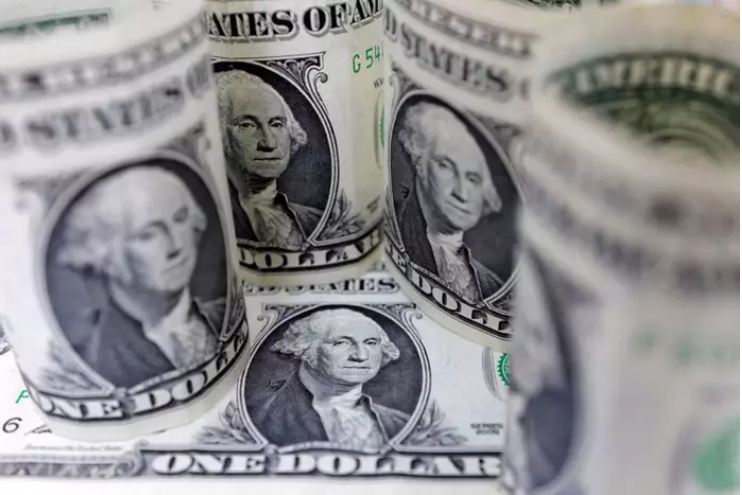
Dollar inches higher after previous day’s jump; investors look to Fed next week

Skylar Shaw

Dec 07, 2022 15:30

微信截图_20221207101307.png


The dollar's performance was also more subdued after it spiked in the previous session on expectations that the Fed could raise rates more than previously anticipated after data showed that the U.S. services industry activity unexpectedly perked up in November. Traders presently anticipate the Fed to announce a half-point increase on December 14th.


According to Marc Chandler, chief market strategist at Bannockburn Global Forex in New York, "there aren't many new incentives." Although "there was a lot of price action yesterday," next week's Fed meeting is the main topic of discussion.


The important consumer price index data for November will also be released the following week, according to the timetable.


Chandler suggested that the dollar may be gaining from stock market bearishness, saying that the dollar "has tended to profit from a risk-off environment." The S&P 500 fell for a fourth straight session as all three of the major U.S. stock indices finished Tuesday with significant declines.


The U.S. dollar index, which compares the dollar to six significant rivals, is still up approximately 10% for the year. On Tuesday, it last increased by 0.3%.


At $1.0465, the euro was down 0.2% vs the dollar, but the dollar was up 0.1% versus the Japanese yen.

Interest rates will increase again, although they are already "quite close" their neutral level, according to policymaker Constantinos Herodotou of the European Central Bank.


Prior to the Bank of Canada's rate decision on Wednesday, the dollar was up 0.5% against the Canadian currency. Although a narrow majority of economists surveyed by Reuters anticipate a 50 basis point rate hike, traders are putting in a 73.3% possibility of a scaled-back 25 basis point boost from the BoC.


At $0.6687, the Australian dollar yesterday fell 0.1%. It increased sooner as a result of the Reserve Bank of Australia's (RBA) seventh rate increase in as many months. The RBA added that although inflation was still high, it was not on a predetermined course to tighten policy.


According to Francesco Pesole, FX strategist at ING, the Western price ceiling on Russian seaborne crude, which went into effect on Monday, may soon start to have an effect on the energy market.