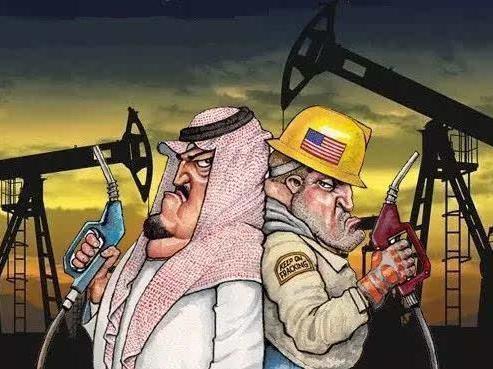
What is currency war
The term "currency war" originated from the "Currency War" published by mainland scholar Song Hongbing in 2007. As the name suggests, it uses currency as a weapon. Countries use "printing silver paper" and intervening in foreign exchange markets to devalue their currencies, thereby enhancing their export competitiveness. Stimulate domestic economic growth.
The first currency war originated in 1921, when European countries fell into financial tensions after World War I. Germany took the lead in implementing hyperinflation and quickly devalued the mark. In 1924-1929, German industrial growth rapidly exceeded that of other countries, France The United Kingdom followed closely behind.
In 1933, the American economy entered the era of the Great Depression. Roosevelt's financial reforms also depreciated the U.S. dollar. The United Kingdom subsequently carried out a second round of currency devaluation, and France continued to follow up in 1936. The vicious devaluation competition among countries has made the economic environment worse and worse. In 1936, the United States, Britain, and France signed the "Tripartite Currency Stability Agreement" that finally ended the currency war.
Therefore, the so-called currency war refers to the different exchange rate policies adopted by various countries in the face of the Great Depression in the last century.
How China and the U.S. may start their urrency war
China may use its currency to fight a trade war.
In mid-June of this year, Beijing held the "2020 Caixin Summer Summit". In his speech, Fang Xinghai, Vice Chairman of the China Securities Regulatory Commission, proposed to accelerate the process of RMB internationalization. "RMBinternationalization" has been 11 years since Shanghai first introduced cross-border trade RMBsettlement as a starting point in 2009. However, Fang Xinghai mentioned three reasons for RMBinternationalization this time, which are worth chewing. This implies that the Sino-U.S. struggle is intensifying, coupled with the rapid changes in the global economy, China and the U.S. will start a new currency war on the international status of the U.S. dollar and the RMB.
Fang Xinghai pointed out the first reason is that Chinese officials and private individuals hold large amounts of US dollar assets overseas. Under the current monetary policy of the Federal Reserve, US dollar assets are very uncertain. The second is that China's financial development is affected by the global monetary and financial system, and under the current monetary policy of the Federal Reserve, the global financial system is facing a great crisis. The third is that the security of the US dollar payment system is worrying.
In recent years, the United States has continuously used the financial status of the U.S. dollar to attack China with various economic sanctions. Fang Xinghai mentioned "security concerns about the U.S. dollar payment system" in the third point. Of course, it does not refer to security in the general sense, but China's long-term dependence on U.S. dollar transactions has given the United States the means to suppress China's "national security" issues. The internationalization of the RMBhas become the best way for China to get rid of the threat of various economic sanctions by the United States. This explains why China has been actively researching digital RMBin recent years.
The impact of the currency war to the world
If China deliberately devalues the renminbi, in order to protect personal property from being affected, Chinese individuals and companies will dump the RMBand buy other currencies, which is a capital outflow. Another hidden concern is that the prices of Chinese products in other countries will be greatly reduced by zero, causing manufacturers in other countries to follow the price reduction, which will bring more extensive damage to the economy.
In recent years, China has been pushing the internationalization of the RMBand RMBsettlement, etc., to some extent, trying to shake the absolute advantage of the dollar. Of course, it is not that China hopes to do so, and other countries will cooperate. Therefore, apart from the increase in the recognition of the RMBitself, the US's excessive use of its dollar advantage as a weapon is also the reason for the decline of the dollar advantage.
U.S. wanton sanctions offend many countries and undermine dollar's status
With the U.S. dollar dominating world trade settlement, the United States can arbitrarily impose economic sanctions on its enemies by manipulating the U.S. dollar. However, if the United States arbitrarily uses sanctions for its own benefit, it will inevitably lead to dissatisfaction with other countries. For example, in 2018, the United States unilaterally withdrew from the Iran nuclear agreement and restarted one-sided sanctions on Iran, which caused countries around the world to question the legitimacy of the United States' actions. The European Union used the "Blocking Act" to prevent the US sanctions from taking effect in the European Union, and China also said it would continue to buy oil from Iran. Russia is also subject to US sanctions, and the situation is similar to Iran. The reckless implementation of economic sanctions by the United States is likely to force countries, especially large powers with certain strength, to try to bypass the US dollar for settlement and settle in other currencies.
According to the statistics of the World Banking, Financial Telecommunications Association (SWIFT), the popularity of the U.S. dollar as an international transaction currency has been on a downward trend in recent years-the U.S. dollar accounted for the total amount of cross-border transactions from 47.87% in 2015 to 41.27% in 2017; instead, the euro Transactions have increased significantly, from 29.75% in 2015 to 39.45% in 2017, which is less than 2 percentage points away from the US dollar. On the other hand, the World Bank data also reflects that the US dollar's share of the world's savings currency is also on a downward trend. The latest quarter (the first quarter of 2018) only accounted for 62.48%, falling for five consecutive quarters, and also a four-year low.
Of course, the dollar advantage cannot disappear in the short term, but if the United States uses the dollar hegemony as an economic weapon for a long time, it will undoubtedly provide other currencies with an incentive to seize the market. The internationalization of the RMB has suffered setbacks since 2015. Although it is now depreciated due to the trade war, it does not seem to have further attacked its status and may further threaten the status of the US dollar in the future.




 Real-time News