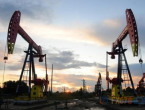
During the Asian session on Monday (October 11), U.S. crude oil continued its gains last week, hitting a seven-year high in the morning to 80.30 US dollars per barrel; Tight supply has pushed up oil prices, while global natural gas shortages have boosted oil demand for power generation and heating. At the same time, the US government said it was monitoring the energy market, but did not announce immediate action to lower oil prices, further supporting the oil market.
In the day, focus on the Federal Reserve Evans' speech at 6:00 on Tuesday, and the US House of Representatives voted on the bill to temporarily raise the debt ceiling.
Bullish factors affecting oil prices
[Global energy crisis boosts demand for crude oil]
US crude oil exceeded US$80 per barrel for the first time since November 2014. As the global energy crisis boosted demand, OPEC+ oil-producing countries still maintained tight supply. There were many signs last week that supply will still be restricted, and Saudi Aramco said that the global gas shortage is already boosting oil demand for power generation and heating.
The weaker-than-expected U.S. non-agricultural employment data last Friday led to the weakening of the U.S. dollar and also increased the attractiveness of U.S. dollar-denominated commodities. Bank of America Global Research stated that the global and European natural gas market is expected to continue to be short, despite the Russian President’s commitment to expand supply, and also believes that the oil market will continue to be short, due to the OPEC+ decision formed by the Organization of Petroleum Exporting Countries (OPEC) and oil-producing countries’ allies. It is planned to increase production by 400,000 barrels per day every month without further expansion. John Kilduff, a partner at Again Capital in New York, said that the fundamental background is tight supply, which will continue to push oil prices up steadily.
Iranian Oil Minister Javad Oji said that in the new oil export plan, oil will be used in exchange for investment or goods. The undecided new plan also covers natural gas condensate, and daily oil demand is expected to increase after unblocking.
Jefferies Group believes that energy shortage is the most critical risk facing global metal demand. Because with the soaring demand and prices of commodities such as natural gas and coal, manufacturers are slowing down production, jeopardizing the economic recovery after the epidemic. <
[U.S. gasoline prices are the highest in 7 years]
According to CNN, gasoline prices in the United States have recently reached their highest level since 2014, casting a shadow over the economic recovery of the United States. At the same time, high energy prices may exacerbate the biggest inflationary panic in the United States in more than a decade.
CNN reported that the price of gasoline in the United States has continued to rise recently. According to data from the American Automobile Association, as of the 7th, the average price of gasoline in the United States has risen to about $3.24 per gallon. A year ago, the average price of gasoline in the United States was A gallon is about $2.18.
According to the report, although the US federal government claims to be considering all applicable measures to deal with high energy prices, industry insiders believe that the government can take very limited measures, and some measures may make the situation worse.
At the same time, U.S. crude oil production was hit by Hurricane Ida in August, and U.S. oil and gas companies generally hesitated to increase drilling and development, which led to weak crude oil supply growth.
[The energy crisis prompts power generation companies to switch to petroleum power generation]
The increase in crude oil prices was stimulated by the surge in European natural gas prices. Data shows that in the past year, the price of LNG in Asia has risen nearly 6 times; the price of natural gas in Europe has soared more than 10 times compared to May last year. Oil prices also soared rapidly, with Brent crude oil breaking through $83, the highest level in three years. While the prices of natural gas, coal, and oil have soared, an energy crisis is sweeping the world.
This has prompted power generation companies to switch to using petroleum for power generation. The Lebanese National Electricity Company said on the 9th that a power plant in the north of the country was closed on the 8th due to fuel shortages, and then another power plant in the south of the country also stopped supplying power. The closure of these two power stations directly affected the stability of Lebanon's national power grid, resulting in a complete interruption of power supply.
The Lebanese National Electricity Company said it is trying to import fuel from Iraq, and the latest batch of fuel is expected to arrive this week. The Lebanese National Electric Company will also try to temporarily use the army’s fuel reserves to restart the power station, but there is no specific timetable for this plan.
Negative factors affecting oil prices
[S&P 500 Index fluctuates downward]
The U.S. stock market fell last Friday and Treasury bond yields rose. The previously announced weak non-agricultural employment data affected the market’s expectations for the Fed’s policy path. The S&P 500 and the Nasdaq 100 index fluctuated downward, and data showed that the number of new jobs in September was far less than expected. Although the report is unlikely to prevent the Fed from announcing a reduction next month, it is expected to eliminate the pressure to raise interest rates early.
Jay Barry, head of U.S. debt strategy at JPMorgan Chase, said, "We don't think this will affect the Fed's debt reduction. With idle labor in the job market, the date of monetary policy tightening is still far away."
It was difficult for the stock market to determine its direction last Friday. The market is volatile and traders buy at low points. JJ Kinahan, chief market strategist at TD Ameritrade, said, “Buying on dips dominates the market.”
[Russia is ready to respond to Europe’s growing demand for natural gas]
Kremlin spokesman Dmitry Peskov told reporters on the conference call that Russia has been, is and will be a responsible country, ready to respond to the increasing energy needs of its European partners.
Peskov said that Russia "completely disagrees" with the US accusations, saying that it uses the energy crisis as a geopolitical weapon; the US is constantly threatening to sanction commercial projects that help stabilize the European energy market, and Russia is ready to discuss new long-term supplies. contract.
Goldman Sachs lowered its economic growth forecasts for the United States in 2021 and 2022 to 5.6% and 4%, respectively, on the grounds that financial support is expected to decrease by the end of next year, and the recovery of consumer spending is slower than previously expected.
[U.S. non-agricultural employment numbers were significantly weaker than expected for the second consecutive month]
The US employment growth in September hit the slowest rate this year, indicating that the labor market recovery has slowed and complicating the Fed’s potential decision to begin to reduce monetary stimulus measures before the end of the year.
According to data released by the US Department of Labor on Friday, non-agricultural employment increased by 194,000 in September, and the number of newly-increased employment in August was revised upward to 366,000. The unemployment rate fell to 4.8%, partly reflecting the decline in the female labor force participation rate. At the same time, the average hourly wage has jumped.
The number of new jobs created in September was weaker than expected by all but one economist surveyed by Bloomberg. Economists predict a median increase of 500,000 people. The sluggish employment growth for several months shows that employers and job seekers are in a tug of war. On the one hand, companies urgently need to increase employees to meet market demand, but job seekers are slow to return to the job market. Nevertheless, in the context of corporate salary increases, the reopening of schools and the end of the federal supplementary unemployment benefits should lead to an increase in hiring in the coming months.
Roberto Perli, a partner at Cornerstone Macro LLC and a former Federal Reserve economist, said, “In short, I think the Fed will consider it prudent to continue to reduce the size as planned and start the process next month, but the Fed may add in the wording. Some warnings to leave room to stop the code reduction when the situation worsens."
Although concerns about the delta mutant strain may have affected recruitment in August and September, in most states in the United States, the number of new crown cases has begun to decline or is about to start to decline, which may bring more U.S. People return to the labor market.
[U.S. Secretary of Labor says delta variants and career changes hurt employment growth]
US Secretary of Labor Marty Walsh said after the disappointing non-agricultural employment report in September that concerns about the Delta variant kept people in the United States and around the world out of the workforce. In an interview with Bloomberg TV, Walsh also said, “Many people are reassessing their work-life balance and changing careers. We obviously have more work to do,” Walsh said, “This is a very "Complicated reports", public education jobs are "far below anyone's expectations." Compulsory vaccination and COVID-19 testing will help people restore a sense of security when they return to work.
On the whole, supply is tight, and under the haze of the global energy crisis, some countries have experienced national power outages, trying to generate electricity from crude oil and increasing demand expectations, which will continue to promote oil prices. It is worth noting that this week will usher in The three major monthly reports on the crude oil market may become the key to whether U.S. oil can stand firmly at the 80 mark.
At 8:34 GMT+8, U.S. crude oil is now quoted at US$80.13/barrel.




 Real-time News