• English
  • 简体中文
  • 繁體中文
  • Tiếng Việt
  • ไทย
  • Indonesia
Subscribe
Real-time News
On September 15th, data from the National Bureau of Statistics showed that in August, the year-on-year decline in new residential property prices in first-tier cities was 0.9%, a decrease of 0.2 percentage points compared to the previous month. Specifically, prices in Beijing, Guangzhou, and Shenzhen fell by 2.3%, 1.9%, and 2.3% respectively, while Shanghai saw an increase of 3.0%. In second- and third-tier cities, the year-on-year declines in new residential property prices were 2.7% and 4.1% respectively, both narrowing by 0.1 percentage points. In August, the year-on-year decline in existing residential property prices in first-tier cities was 2.7%, a decrease of 1.0 percentage point compared to the previous month. Specifically, prices in Beijing, Shanghai, Guangzhou, and Shenzhen fell by 3.5%, 0.8%, 3.8%, and 2.7% respectively. In second- and third-tier cities, the year-on-year declines in existing residential property prices were 4.9% and 5.6% respectively, both narrowing by 0.2 percentage points.New Residential Housing Prices: 1. Beijing: August new residential housing prices -0.2% month-on-month (previous value -0.3%), -2.3% year-on-year (previous value -2.3%). 2. Shanghai: August new residential housing prices +0.4% month-on-month (previous value +0.2%), +3.0% year-on-year (previous value +3.0%). 3. Guangzhou: August new residential housing prices +0.1% month-on-month (previous value +0.1%), -1.9% year-on-year (previous value -2.2%). 4. Shenzhen: August new residential housing prices +0.2% month-on-month (previous value +0.2%), -2.3% year-on-year (previous value -2.9%). Second-hand Residential Housing Prices: 1. Beijing: August second-hand residential housing prices -0.1% month-on-month (previous value 0.0%), -3.5% year-on-year (previous value -4.5%). 2. Shanghais existing home prices in August increased by 0.3% month-on-month (previous value +0.3%) and decreased by 0.8% year-on-year (previous value -2.0%). 3. Guangzhous existing home prices in August remained unchanged month-on-month (previous value +0.4%) and decreased by 3.8% year-on-year (previous value -4.7%). 4. Shenzhens existing home prices in August increased by 0.1% month-on-month (previous value +0.2%) and decreased by 2.7% year-on-year (previous value -3.6%).National Bureau of Statistics: Beijings second-hand housing prices in August decreased by 0.1% month-on-month (previous value +0%) and decreased by 3.5% year-on-year (previous value -4.5%).According to the National Bureau of Statistics, the price of second-hand residential properties in Shenzhen rose 0.1% month-on-month in August (up 0.2% in the previous month) and fell 2.7% year-on-year (down 3.6% in the previous month).September 15th - The 2026 China Carbon Market Conference was held in Wuhan, Hubei Province this morning, and the "National Carbon Market Development Report (2026)" was released at the conference. Reporters learned that as of the end of August, the national carbon emission trading market had accumulated transactions exceeding 900 million tons, with a transaction value exceeding 60 billion yuan. The national carbon market has grown from nothing to a significant stage, playing a crucial role in promoting the achievement of carbon peaking and carbon neutrality goals.

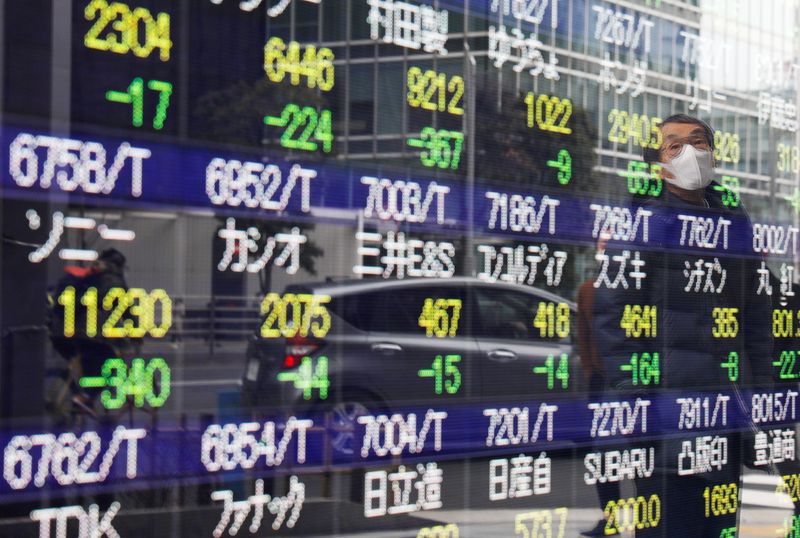
Asian stocks bounce off two-month low as bonds, China markets steady

LEO

Oct 25, 2021 14:07

By Hideyuki Sano and Matt Scuffham

TOKYO/NEW YORK (Reuters) - Asian stocks bounced back from a two-month low on Wednesday after global bond yields eased following a well-received U.S. debt auction and as Chinese shares found a footing after recent steep falls on policy tightening worries.

A recent sell-off in global bonds has unsettled markets generally as concerns central banks could begin tightening the monetary spigot pushed yields higher, sparking worries higher borrowing costs could derail a fragile global economic recovery.

Japan's Nikkei was little changed while MSCI's ex-Japan Asia-Pacific shares index rose 0.2%, a day after it hit a two-month low. The CSI300 index of mainland China's A-shares rose 0.4%.

Despite this, European and U.S. shares eased slightly as investors remained nervous about a bond bear run ahead of key inflation data and bond auctions in the United States.

Euro Stoxx 50 futures fell 0.3%, while Britain's FTSE futures traded 0.7% lower.

Gains in Asian stocks came after Chinese shares had fallen to their lowest levels since mid-December the previous day on the prospect of tighter policy and a slowing economic recovery.

"Markets are giving full attention to bonds. As earnings are not growing that fast right now, the lofty stock prices we have now will become unsustainable if bond yields rise further and undermine their valuation," said Hiroshi Watanabe, senior economist at Sony (NYSE:SNE) Financial Holdings.

The yield on benchmark 10-year notes slipped to 1.540%, having peaked at 1.626% on Friday, after Tuesday's auction of $58 billion in U.S. 3-year notes was well received.

Yet, many market investors remained on edge, with the next tests of investor appetite for government debt due later this week in the form of 10-year and 30-year auctions.

"Although the bond market has steadied a bit, pressures will remain," said Naokazu Koshimizu, senior rates strategist at Nomura Securities.

"It has priced in future normalisation of the Fed's monetary policy, the Fed's policy becoming eventually neutral. But it has not yet priced in the chance of its policy becoming tighter."

Some investors see a real risk of an overheated U.S. economy and higher inflation on the back of planned spending by U.S. President Joe Biden's administration, including a $1.9 trillion stimulus and an even bigger initiative on infrastructure.

U.S. consumer price data due at 1330 GMT is expected to show a slight acceleration in the overall inflation in February, with analysts expecting further gains in coming months due to base effects from a severe economic downturn in early 2020.

The speedier rollout of COVID-19 vaccines in some countries and the planned U.S. stimulus package helped underpin a brighter global economic outlook, the Organisation for Economic Cooperation and Development said, as it raised its 2021 growth forecast.

Some investors worry loose monetary policy could unleash inflation, though Federal Reserve Chair Jerome Powell has so far pledged to keep low interest rates and maintain its monthly bond purchase of $120 billion.

In foreign exchange markets, the dollar was supported by expectations of faster U.S. economic recovery.

The euro eased 0.25% to $1.1871, not far from Tuesday's 3 1/2-month low of $1.18355. The yen changed hands at 108.85 per dollar, having hit a nine-month low of 109.235 set the previous day.

The Australian dollar shed 0.6% to $0.7672 after the country's top central banker rebuffed market chatter about early rate increases. [AUD/]

Oil prices fell as concerns over a supply disruption in Saudi Arabia eased.

U.S. crude futures slipped 0.9% to $63.44 per barrel, away from a near 2 1/2-year high of $67.98 touched on Monday.


Brent crude futures dropped 1.1% to $66.78 per barrel.

