• English
  • 简体中文
  • 繁體中文
  • Tiếng Việt
  • ไทย
  • Indonesia
Subscribe
Real-time News
On June 18th, Vuk Vukovic, Chief Investment Officer of hedge fund Oraclum Capital, stated that the key issue right now is not inflation or interest rates, but politics. He pointed out that when Warsh took office, inflation was accelerating—CPI reached 4.2% and PPI reached 6.5%, which limited the Federal Reserves room to fulfill its previous promises of interest rate cuts. However, recent easing of geopolitical tensions, especially the de-escalation of US-Iran tensions, has pushed down oil prices, providing Warsh with a breather. Vukovic predicts that Warsh is more likely to emphasize this positive factor rather than issue warnings about inflation. "I dont think he will release any hawkish signals at this meeting," he wrote. "The most likely scenario is a dovish start to his term, to get off to a good start." Logically, if Warsh abandons providing rigid forward guidance, the market will turn to other sources of signals, and the weight of government trade, foreign, and economic policies will increase. The political gravity surrounding this new chairman may point to a more dovish tone to reassure the market and maintain economic momentum. Whether this judgment is correct will be the first major test of Warshs communication strategy.U.S. officials: The meeting in Switzerland this weekend will be crucial for observing progress in negotiations with Iran.The "Stay On" Camp: 1. Moodys: Expects the Fed to hold rates steady, with a rate cut unlikely in the short term. Holding rates steady this year is the baseline scenario. If inflation expectations continue to rise, a rate hike may be the next step. 2. Nomura: Expects the Fed to hold rates steady, with a reduced likelihood of a rate cut in the short term. Rates are likely to remain unchanged in 2026. 3. JPMorgan Chase: Expects the Fed to hold rates steady and for the remainder of the year to remain unchanged. The policy stance is likely to shift clearly from accommodative to neutral. 4. Wells Fargo: Expects the Fed to hold rates steady. A rate hike would require evidence of a significantly overheated labor market or a further deterioration in the inflation outlook. It is difficult to find justification for any action at this stage or in the foreseeable future. 5. BNY Mellon: Expects the Fed to hold rates steady. The statement is expected to suggest two-way risks to interest rates. The Fed is expected to remove its 2026 rate cut expectations, and there will be no rate cuts or hikes this year. Rate Cut Camp: 1. Goldman Sachs: Expects the Fed to hold rates steady and likely removes its previous forward guidance hinting at rate cuts; short-term rate hikes are unlikely, with rate cuts expected in June and December 2027. 2. UBS: Expects the Fed to hold rates steady and likely to formally abandon its dovish stance; still believes the Feds next move will be rate cuts, with 25 basis point cuts expected in March and June 2027. 3. Citigroup: Expects the Fed to hold rates steady, but with easing tensions in the Middle East driving down oil prices and a weakening labor market, expects the Fed to cut rates by 25 basis points in September, October, and December. 4. Commerzbank: Expects the Fed to hold rates steady and likely abandons its dovish language. Rate cuts are expected to begin around mid-next year, accumulating to 75 basis point cuts by the end of 2027. Rate Hike Camp: 1. Capital Economics: Expects the Fed to hold rates steady, with a high probability of two "insurance rate hikes" in December and early next year. 2. BNP Paribas: Expects the Fed to raise rates little before the November midterm elections, with the first rate hike likely in December at the earliest, and at a more moderate pace than in 2022. 3. Deutsche Bank: Expects the Fed to hold rates steady, maintaining its baseline assessment of keeping rates unchanged for the long term, but the risk of future rate hikes is rising. 4. PGIM: Expects the Fed to hold rates steady, with three rate hikes this year to curb overheating, three rate cuts in 2027, and one more in 2028, ultimately reaching a rate of 3.375%. Others: 1. Barclays: Expects the Fed to hold rates steady, with forward guidance wording likely to be removed from the statement to reduce implications for future rate cuts. 2. Bank of America: Expects the Fed to hold rates steady, with the statement likely to remove any mention of an accommodative bias and potentially adjust its description of job growth. 3. ANZ: Expects the Fed to hold rates steady, with the statement likely to remove any accommodative wording and reaffirm its commitment to achieving its 2% inflation target. 4. Mitsubishi UFJ: Expects the Fed to hold rates steady. The upcoming FOMC meeting is crucial, not because of policy changes, but because of forward guidance. 5. Investment management firm MFS: Expects the Fed to hold rates steady, potentially indicating a neutral monetary policy stance. Warsh may also make some changes, such as ceasing the use of the dot plot and reducing press conferences.U.S. official: We will take some steps to build trust and see if we can reach an agreement.US officials: Iran has at least agreed to destroy its enriched uranium stockpile through dilution.

Stock Investors Are Extremely Anxious in Trying to Pick the Bottom

Jimmy Khan

Oct 17, 2022 16:20

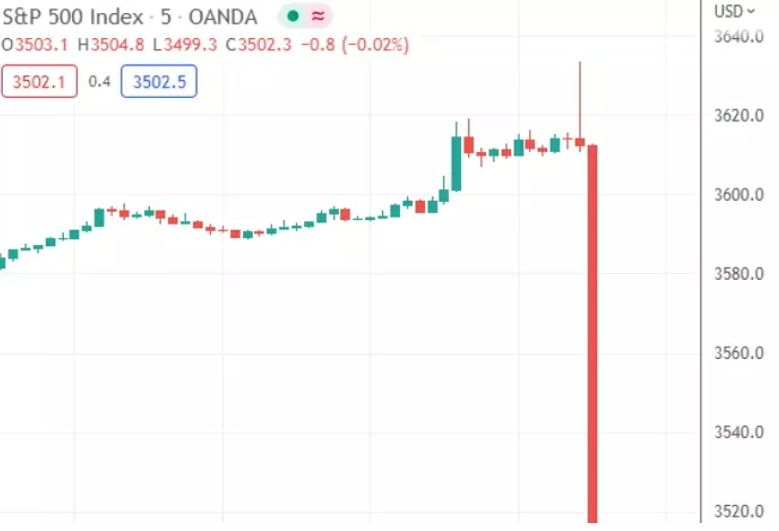
The price swings of yesterday serve just as a reminder of the extraordinary volatility we are now seeing.


Economic Stability Inflation is still rampant, particularly in some of the stickier areas like food, where it is at levels last seen in the late 1970s. Furthermore, I haven't really seen any significant decreases in rent, and it seems like energy costs are attempting to sneak back up.


However, wage growth is still robust, and there haven't been any significant decreases in the work force or large-scale layoffs. In other words, the bulls could have just made another false start.


Some bulls are once again claiming that the higher CPI readings represent "peak" inflation, but an increasing number seem to feel that the Fed will change direction sooner than anticipated due to other economic worries.


The Fed's initial area of concern would probably be the impact on the US labor market. But many economists think there is capacity for the Fed to raise rates and hold them there for a lot longer than Wall Street anticipates, given that unemployment is just 3.5%.


Others think the Fed will be persuaded to undertake lower rate increases or perhaps to suspend them as a result of problems developing in other financial markets or institutions. Along with that, there is also the worry that a financial blunder may ultimately lead to a larger financial crisis with repercussions for all international markets.


For your information, the markets anticipate a 95% possibility that the Fed will increase interest rates by an additional 75 basis points at its forthcoming FOMC meeting on November 2. And there is a 70% possibility that they will increase rates by another 75 basis points at the FOMC meeting on December 14.