• English
  • 简体中文
  • 繁體中文
  • Tiếng Việt
  • ไทย
  • Indonesia
Subscribe
Real-time News
August 11th - InvestingLive, a US financial website, reported that the Reserve Bank of Australias (RBA) interest rate decision was in line with expectations. The RBA did not express excessive concern about recent inflation trends, but its forward guidance did see some minor adjustments. While not explicitly pointing to further tightening measures, policymakers wanted the market to know that inflation risks are now skewed to the upside, no longer a two-sided risk scenario. Therefore, the wording of this statement was clearer regarding its policy priorities. The RBA also included a timeline, indicating that inflation is unlikely to fall back to its target level by the end of next year. This leaves some room for further rate hikes in the near future if necessary. The unanimous decision itself did not leave much room for traders to maneuver. Essentially, the RBA reiterated that they acknowledge the possibility of raising the cash rate again if necessary, but are not in a hurry to do so. Before the decision was announced, traders priced in a 97% probability of no change at this meeting. Therefore, this is more or less in line with market expectations.On August 11, Iranian President Manuel Pezechzian stated that his recent meeting with Irans Supreme Leader Mojtaba Khamenei lasted seven to eight hours, during which various topics were discussed in depth. Pezechzian also stated that the most important task at present is to prevent internal division, and that all of the enemys plans are aimed at creating division within Iran. Earlier that day, Pezechzian had also said that Mojtaba was in "very good health."On August 11th, the Reserve Bank of Australia (RBA) kept its key interest rate unchanged, betting that rising unemployment and a weak housing market would be enough to curb economic activity and thus suppress inflation. Market observers will be watching Governor Bullocks afternoon press conference for further guidance. The statement indicated that "the Committee remains focused on ensuring that high inflation does not become entrenched. Where monetary policy is perceived to be somewhat restrictive," the Committee said it will "continue to take the necessary steps to bring inflation sustainably back to its target level, including further raising the cash rate target if upside risks materialize." Australias four major banks all believe the RBA has completed its tightening policy and will pause its actions for a period before shifting to an easing policy. Westpac believes that higher borrowing costs and the end of the property investor tax credit are putting pressure on the housing market, again demonstrating the powerful effect of coordinated fiscal and monetary policy. Furthermore, the RBAs quarterly economic forecasts show that while the unemployment rate is expected to rise slightly from three months ago, the labor market remains slightly tight.Australian Treasurer Chalmers: The Reserve Bank of Australia’s decision to keep interest rates unchanged amid heightened global uncertainty and ongoing domestic pressure is a welcome one.On August 11th, the Reserve Bank of Australia (RBA) kept interest rates unchanged for the second consecutive meeting, despite inflation remaining well above target. This outcome was in line with widespread expectations from economists and the money market. While renewed escalation of the Middle East conflict drove oil prices higher again, lower-than-expected inflation data released in late July dampened market expectations for an August rate hike, giving the committee more breathing room to monitor developments in the Strait of Hormuz. The RBAs economic forecasts indicate that it still expects inflation to remain above 2.5% until early 2028. Another consideration for the RBA was the rapidly deteriorating housing market, which could drag down household consumption and further weaken economic momentum. After three rate hikes in the first half of the year, house prices had begun to fall, but the downward trend accelerated since the federal budget tightened tax breaks for property investors. In its monetary policy statement, the RBA noted that a larger-than-expected drop in house prices could further drag down economic growth.

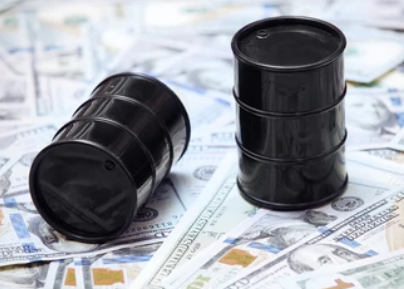
Oil Prices Fall Due to U.S. Rate Hikes And China

Haiden Holmes

Nov 18, 2022 11:44

119.png


On Thursday, oil prices fell by more than 3% as mounting COVID-19 cases in China and anticipation of more aggressive U.S. interest rate hikes impacted demand.


Brent crude fell $3.08 per barrel, or 3.3%, to close at $89.78 per barrel. The price per barrel of U.S. West Texas Intermediate (WTI) crude oil decreased by $3.95, or 4.6%, to $81.64.


Dennis Kissler, senior vice president of trading at BOK Financial, commented, "It's equivalent to a triple whammy: an increase in COVID-19 cases in China, rising interest rates in the U.S., and now technical weakness in the market."


President of the Federal Reserve Bank of St. Louis, James Bullard, claimed that a basic monetary policy rule would need interest rates to increase to at least 5%, while stronger assumptions would require rates to exceed 7%.


As investors reviewed U.S. economic data, the value of the dollar rose. The price of oil priced in dollars increases for holders of other currencies when the dollar strengthens.


China reported daily rises in COVID-19 infections, and Chinese refiners allegedly sought a decrease in Saudi crude exports in December, while crude purchases from Russia stalled.


Despite the fact that China has fewer COVID instances than other countries, the world's largest importer of petroleum maintains strict regulations to control early outbreaks, hence cutting gasoline use.


On the basis of technical indicators, U.S. front-month futures fell below the 50-day simple moving average, leading to fund liquidation, Kissler said, adding that he expects the pressure to persist into the start of the next week.


Phil Flynn, an analyst at Price Futures Group, stated, "The market is becoming acutely aware of the potential for massive demand destruction, and sentiment is clearly swinging to the downside."


Wednesday, Poland and NATO declared that a missile that landed in their country was likely a stray shot by Ukraine's air defenses and not a Russian strike, assuaging fears that the Russia-Ukraine confrontation may intensify.


Craig Erlam, a senior market analyst at OANDA, stated, "Thank god, these concerns have abated and the situation has deescalated, resulting in oil price declines." China is an immediate downward risk for oil.


According to government statistics, oil stockpiles in the United States decreased by more than 5 million barrels in the most recent week. [EIA/S]


As OPEC and its allies, often referred to as OPEC+, implement their most recent output cuts to boost the market, the November supply is also tightening.