• English
  • 简体中文
  • 繁體中文
  • Tiếng Việt
  • ไทย
  • Indonesia
Subscribe
Real-time News
On August 3, U.S. Treasury Secretary Bessant posted on social media on the evening of August 2 that "the coordinated U.S.-Japan foreign exchange intervention effectively curbed the disorderly fluctuations in the yen exchange rate," and the Trump administration strongly supports "Japans market and monetary policy measures to correct the significant undervaluation of the yen." Bessant stated that the U.S. Treasury is closely monitoring the situation and will "not hesitate to participate in further joint intervention." Japanese Finance Minister Satsuki Katayama also confirmed on August 3 that Japan and the U.S. jointly implemented foreign exchange market intervention. She also stated, "We will not hesitate to further jointly implement foreign exchange market intervention in the future." It is understood that to curb the historic depreciation of the yen, the monetary authorities of Japan and the United States jointly implemented a foreign exchange market intervention last week, buying yen. In the international foreign exchange market, the trend of buying yen and selling dollars dominated, and the yen exchange rate once rose to the range of 156 yen to the dollar—the first time it has reached this level in about three months since early May of this year.According to foreign media reports, CBOT soybean futures fell in the week ending July 31, with the benchmark contract closing down 5.27%, retreating from a more than two-year high reached the previous week. This decline mainly reflected favorable rainfall expected in the Midwest in the coming days. Crude oil futures also fell, with funds liquidating positions at the end of the month. However, strong demand for US soybeans provided bottom support. Weather factors were the core factor suppressing soybean prices this week. The USDAs crop progress report showed that as of July 26, the US soybean condition rating had fallen to 63%, down from 66% a week earlier and also at a relatively low level for the same period in recent years, reflecting the stress that previous high temperatures and drought had placed on crops. Demand continued to provide important support. The USDAs weekly export sales report showed that as of the week ending July 23, US net soybean sales were 1.63 million tons (300,000 tons of old crop and 1.33 million tons of new crop), up from 1.59 million tons a week earlier (50,000 tons of old crop and 1.54 million tons of new crop). The soybean market was also affected by the sharp fluctuations in the energy market. The sharp decline in international crude oil prices weakened the energy premium of soybean oil and dragged down soybean futures prices.Lenovo Holdings (03396.HK): It expects its net profit for the first half of this year to be no less than RMB 2 billion, an increase of 186% year-on-year.August 3rd - According to foreign media reports, Malaysia is considering allowing some exports of unprocessed rare earth elements to solidify its position in supply chains across industries ranging from automobile manufacturing to defense and consumer goods. Malaysia suspended unprocessed rare earth exports in 2024 to stimulate investment in domestic processing industries—a common strategy among resource-rich developing countries. However, according to a senior government official, authorities are currently assessing the feasibility of relaxing restrictions as competition surrounding these minerals intensifies. Syed, Malaysias Deputy Minister of Natural Resources and Sustainable Environment, stated, "Any new exports will come with conditions, including being linked to inbound investment and technology transfer." He declined to provide a timeline for adjusting export regulations. Syed stated that Malaysia possesses 16.1 million tons of "inferred reserves" of rare earth elements. The government has previously indicated that these reserves could be worth 970 billion ringgit (US$237 billion).Japans Ministry of Finance: We remain vigilant and maintain close contact with the U.S. Treasury Department.

Stock Market Psychology: Critical Concepts Every Trader Should Understand

Drake Hampton

Mar 23, 2022 16:10

Stock market psychology is the capacity to recognize and manage the emotions and behaviors that may arise during trading. While the stock market is a forward-looking gauge of expectations for corporate profits performance, it is frequently influenced by variables affecting both individual and collective trading psychology.


Three criteria to consider are the following:


  • Investor sentiment

  • Sentiment in the market

  • Fear or greed are examples of emotions.


The purpose of this article is to demonstrate the critical nature of trading psychology in the stock market and to give further information and advice on how to handle it. Our guide to stock trading for beginners provides an overview of the stock market.


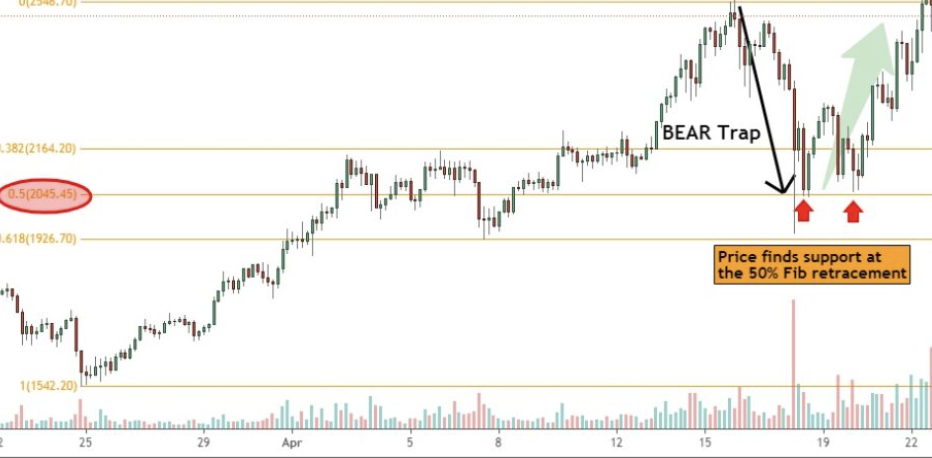
 图片1.png

The Importance Of Psychology In Stock Market Trading 

While the impact of psychology in the stock market is sometimes underestimated, being able to detect and handle these psychological elements may be tremendously useful for a trader. Individually, illogical financial decisions are frequently motivated by emotions such as anxiety, greed, and the fear of losing out (FOMO in trading). Crowd psychology, on the other hand, contributes to significant market fluctuations by eliciting emotions and resulting in fear-based trading.


A case in point of this is a worldwide pandemic. When fear levels rise, stock market volatility frequently follows. Volatility increases are typically followed by one of two emotions: fear or FOMO. Pessimism appears to exert a stronger influence on volatility than optimism. Fear frequently results in 'panic selling,' as traders hurry to quit deals in order to avoid more losses.


Market sentiment is an excellent indicator of volatility since it is used to determine how investors view a market at any particular time. When traders believe the market to be bearish, there will be more selling than buyers, implying a negative crowd psychology.


Stock indices are the most direct indication of audience psychology for equities. A stock index measures the performance of a group of stocks within a certain country or market. The major stock indexes are used to compare the returns on various assets and to follow the broader economy via the index's performance.


Once a trader has a firm grasp on both personal and group psychology, it is critical for the trader to control emotions appropriately. While some emotions should be welcomed, the negative impacts of trade psychology on investing decisions are often bigger than the favorable benefits of positive psychology.


Fear and greed may be detrimental to traders by pushing them to behave rashly. When a trader exits a position early, this is an example of fear-based trading. Dread may also manifest as greed when traders maintain losing positions for an extended length of time out of fear of incurring a loss.


To gain from stock market psychology, a trader must embrace good psychological variables while seeking to moderate negative psychological factors.

Five Techniques for Managing Your Emotions When Trading Stocks

1. Create a trading strategy

A trading strategy serves as a guide for traders throughout the trading process. It is a collection of rules that specifies the circumstances that must be satisfied before a trade is initiated, the markets on which the transaction should be executed, and when the trades should be exited. A trading strategy's objective is to guarantee that the trader remains accountable and adheres to the plan.

2. Develop a check list

Having a trading strategy is one thing; adhering to it is quite another when deals go against you. Having a concise checklist on hand guarantees that the trader follows the trading plan's guidelines throughout the trading process.

3. Maintain a notebook

As a trader, it is critical to evaluate your performance and discover areas for development. A diary is an excellent tool for this, since it enables a trader to keep track of all transactions and determine what worked and what didn't. Occasionally, a diary will reveal flaws in a trading plan or approach that must be corrected.

4. Establish reasonable expectations and foster confidence

Building confidence may be challenging, especially during the early phases of a strategy's testing. Confidence is critical because it enables a trader to take measured risks and accept the consequences of those risks. This is because a confident trader is typically aware of their own trading psychology and has established strategies to handle it. One strategy to develop trading confidence while also learning about trading psychology is to trade on a demo account. The objective is to establish reasonable expectations and to use the demo account as though it were real money.

5. Utilize risk management techniques

A trader cannot afford to overlook risk management. Calculating risk/reward ratios, using stop losses, and trading in small increments are all critical components of a sound risk management approach.

Is trading psychology applicable just to the stock market?

Trading psychology is universal in nature, encompassing all financial markets and instruments. Emotions will always play a role regardless of the instrument traded, which is why it is critical to have measures in place that keep you focused on your goals regardless of your emotions.