• English
  • 简体中文
  • 繁體中文
  • Tiếng Việt
  • ไทย
  • Indonesia
Subscribe
Real-time News
NATO Secretary General Rutte: The US military buildup in Europe will be carried out gradually and in an orderly manner.On May 20th, according to Irans Tasnim News Agency, Iranian military spokesman Mohammad Akraminia emphasized the armys state of readiness in a speech on Tuesday. He stated that the army has treated the "ceasefire period" as a "wartime period" and has used this opportunity to enhance its combat capabilities. Regarding hostile forces, the spokesman stated that Iran will never be besieged or defeated. He warned that if the enemy makes another foolish move and falls into the Jewish trap again, launching another invasion of Iran, then the country will open new fronts to confront them through new means and methods. At the same time, he emphasized the Iranian armed forces control of the Strait of Hormuz, stating that the situation in this strategic waterway cannot return to its previous state. He said, "The only way out for the enemy is to respect the Iranian nation and respect Irans legitimate rights."NATO Secretary General Rutte: Discuss ensuring sustainable long-term support for Ukraine.NATO Secretary General Rutte: NATO needs to break free from its unhealthy dependence on a single ally.On May 20th, Cornwall Insights, a UK-based energy consultancy, released a report on May 19th forecasting household energy price ceilings for July to September 2026. The report stated that rising energy prices due to the Middle East conflict could increase the annual energy expenditure ceiling for UK households by 13%. According to the final forecast, a UK household using both gas and electricity could see its annual energy bill reach as high as £1,850 (approximately US$1.339 per pound), up from a previous forecast of £1,641. The report points out that the main reason for the energy price increase is the sharp rise in global energy prices following the outbreak of the Middle East conflict. Although the temporary ceasefire has somewhat mitigated market volatility, prices remain high. The report predicts that even if the conflict ends immediately, the damage to infrastructure and supply chain disruptions will have a lasting impact, making it difficult for the UK household energy cost ceiling to fall back to April levels this autumn.

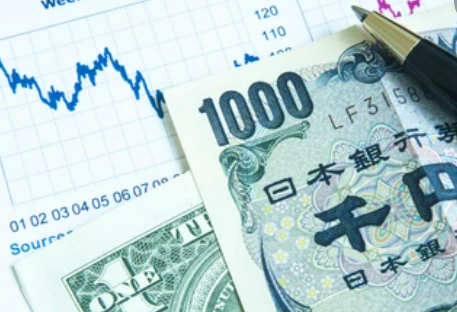
Dollar moves on yen intervention reports, but markets rise

Charlie Brooks

Oct 24, 2022 14:10

3.png


On Monday, the U.S. dollar saw a rollercoaster ride versus the yen, as markets expected greater intervention by Japanese authorities and Asian stocks soared on the mere notion of a future halt in U.S. rate hikes.


After an initial jump to 149.70 yen, the dollar sank as low as 145.28 yen in a matter of minutes. With an early spike to 149.70 yen, the dollar's first sentiment was optimistic. Despite irregular movements, the dollar was recently up 0.5% to 148.36.


According to the Financial Times, the Bank of Japan may have sold at least $30 billion on Friday in an attempt to halt the yen's devaluation, which has significantly increased the cost of imports, especially for raw materials.


The price movement strongly suggested that Japanese officials had intervened, although they declined once more to confirm this.


In response to the news that Boris Johnson had withdrawn from the campaign for prime minister, the British pound fluctuated.


This increased the possibility that the market's preferred candidate, former finance minister Rishi Sunak, would win the election and temporarily removed the pound's political uncertainty.


As investors expected additional contest-related details, the value of the pound rose nearly a penny to $1.1402 upon hearing the news, and was last trading 0.2% higher at $1.1328.


In reaction to speculations that the Federal Reserve was contemplating when to halt rate hikes and may take a step back at its November meeting, New York stocks continued their late-day gain on Friday.


The markets continue to price in a 75 basis point increase for next month, but betting on a similar increase for December have decreased. The highest rate has declined from above 5 percent early last week to roughly 4.87 percent.


Due to the potential of a less aggressive Federal Reserve, S&P 500 futures in Asia rose 0.6%, while Nasdaq futures rose 0.8%.


MSCI's broadest Asia-Pacific shares index excluding Japan increased by 0.7%, while Japan's Nikkei and South Korea's Nikkei increased by 1.2% and 1.5%, respectively.


The markets are presently anticipating the publication of U.S. gross domestic product data on Thursday and core inflation data the day after. The economy is predicted to have expanded by 2.1% on an annualized basis during the third quarter, however the Atlanta Fed's GDP Now estimate is 2.9%.


Earnings reports from Apple (NASDAQ:AAPL), Microsoft (NASDAQ:MSFT), Google's parent company Alphabet (NASDAQ:GOOGL), and Amazon (NASDAQ:AMZN) will test investor mood.


This week, the European Central Bank is expected to increase interest rates by 75 basis points, although it is uncertain whether this will portend a similar increase in December.


In a note, NatWest Markets analysts noted, "Although we do not anticipate any 'dovish' policy signal, we maintain a bias for a lower rate path than the markets are presently pricing in."


They stated, "We estimate +50bp in December and +25bp in early 2023 to achieve a top of 2.25 percent." "Additional ambiguity surrounds QT, where sales data for Q1 2023 could be revealed,"


After briefly touching a session high of $0.9899, the euro held steady at $0.9849.


The yield on 10-year U.S. Treasuries is at 4.21 percent, down from a 15-year high of 4.33 percent on Friday.


Gold also increased, gaining 0.2% to $1,660 per ounce.


Brent crude jumped by 27 cents to $93.77 per barrel, while U.S. crude rose by 34 cents to $85.9.