• English
  • 简体中文
  • 繁體中文
  • Tiếng Việt
  • ไทย
  • Indonesia
Subscribe
Real-time News
On May 16th, European Central Bank (ECB) Governing Council member Stournaras stated that a small interest rate hike by the ECB could curb inflation without causing economic damage. Even if the inflation rate is significantly above the target level for a period of time, as long as it is temporary, future tightening of monetary policy should be more moderate. This would both curb further inflation and avoid excessive shock to economic activity. The duration and intensity of the energy crisis, and its transmission mechanism to the real economy, will also determine the ECBs response. The ECB will continue to closely assess all available data and is prepared to set policy rates at a level consistent with maintaining price stability in the medium term. This typically dovish official emphasized that there is currently no strong evidence of a second round of inflation, but he also warned of rising uncertainty, as damage to energy infrastructure in the Gulf region could prolong inflationary pressures in the medium term. Extended delivery times and rising input costs indicate that supply chains are facing increasing pressure.May 16th - Despite geopolitical tensions and a flood of synthetic diamonds, Zimbabwes main state-owned diamond miner plans to produce 5 million carats of diamonds this year, up from 3.8 million carats in 2025. Douglas Zambangor, CEO of United Diamonds Zimbabwe, told lawmakers in the eastern town of Mutare that the countrys diamond industry has experienced a more severe downturn than the international market due to a series of local problems. While international rough diamond prices have fallen by 26% to 35%, Zimbabwean diamonds have plummeted from a peak of $79 per carat to $22 per carat due to product mix issues, geopolitical tensions, synthetic diamonds, market collusion, and an unfavorable sales framework. The international diamond market remains sluggish, especially for unique rough diamonds, with prices projected to range between $22 and $34 per carat by 2026. In contrast, other producers are averaging $100 per carat for high-quality rough diamonds.May 16th - According to sources, FIFA Secretary General Matthias Grafström will meet with officials from the Iranian Football Federation in Istanbul, Turkey, on the 16th. FIFA will "assure" Iran that it will be able to participate in the 2026 FIFA World Cup. US Secretary of State Rubio previously stated that Iranian footballers will be welcomed at this World Cup, but also warned that the US may still ban Iranian team members with ties to the Islamic Revolutionary Guard Corps from entering the country.May 16 - According to sources cited by Irans state news agency, Pakistani Interior Minister Naqvi arrived in Tehran a few hours ago to meet with Iranian officials.May 16th - On May 16th local time, in the first round of the WorldSSP class of the 2026 World Superbike Championship (WSBK) Czech Republic, Valentin Debis, the No. 53 French rider from Chinese motorcycle manufacturer "Zhang Xue Motorcycle", won the championship.

Crypto Volatility Knocks More Stablecoins off Their Peg

Jimmy Khan

Jun 17, 2022 15:17

微信截图_20220617144947.png


According to CoinGecko statistics, the market value of stablecoins fell to $156.8 billion on Thursday, down from roughly $181 billion at the start of May.


On Wednesday, Tether, the world's biggest stablecoin, fell to $0.993, but rapidly restored parity with the dollar.


In a letter, crypto digital asset management IDEG noted, "Stablecoin market cap goes hand in hand with sentiment and liquidity in crypto markets, and it's somewhat alarming that USDT looks to be seeing another wave of liquidations."


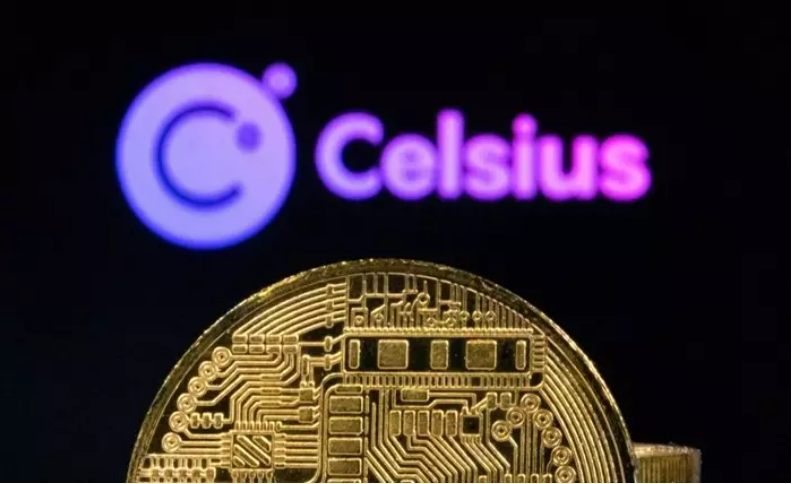
The digital asset markets are suffering after crypto lender Celsius suspended withdrawals and transfers between accounts on the wake of the terraUSD stablecoin's implosion last month, as well as global monetary tightening making riskier assets like cryptocurrencies less appealing.


Stablecoins are crypto tokens that are tied to the value of traditional assets like the dollar, and because of their decreased volatility, they are the preferred method of transferring money between digital tokens or into cash.


They're also a target for funds that arbitrage between exchanges and locations in the hopes of betting on stablecoins that are barely below par recovering parity.


Tether's market valuation has dropped more than $5 billion in the last 30 days due to worries about its reserves-backed Tether's exposure to Celsius, as well as continued concerns regarding its reserve assets.


"They (Tether) are likely to have some bad loans because of Celsius," Joseph Edwards, head of financial strategy at crypto business Solrise Group, stated.


"Tether's market worth is still over $70 billion," he noted, "and these things are a drop in the ocean."


Tether, for its turn, said that any loans to Celsius were overcollateralized and that "false rumors" were fueling concerns about the composition of its commercial paper reserves.

Stablecoins based on algorithms have also become popular.


A number of algorithmic stablecoins have also been impacted, including terraUSD, which uses complicated processes to restrict token issuance and keep its peg to the underlying value.


According to researcher CryptoCompare, USDD, the algorithmic stablecoin of smart contract platform Tron and the ninth-largest stablecoin by market size, lost its peg to the dollar on Monday, plummeting as low as $0.96 as short-sellers built up severe bets against the cryptocurrency.


Justin Sun, the inventor of Tron, has pledged to spend more than $2 billion to preserve the stablecoin's peg.


"I don't believe they'll endure even a day." On Monday, he tweeted, "Short squeeze is coming." Sun did not reply to a request for comment right away.


The Tron DAO, which administers the stablecoin's reserves, said on Wednesday that 2.5 billion of its tron tokens will be removed from the Binance crypto market to assist support the USD. USDD, on the other hand, has failed to reclaim its peg and is now trading at $0.976.


Other algorithmic stablecoins, such as the Frax stablecoin, which has since rebounded, and the Neutrino USD, which fell as low as $0.93 on Wednesday and is now trading below the dollar at $0.966, have also been de-pegged in recent weeks.


Even still, these stablecoins are a fraction of the size of Tether or even terraUSD at its height.


"Algorithmic stablecoins are experiencing depegs once again, but this is nothing new... "If anything awful happened to them, it wouldn't cause the ecosystem to split the way Tether did," Edwards said.


USD Coin, which is backed by cash and U.S. Treasury notes and has seen its market worth slowly rise to more over $54 billion from $52 billion over the previous month even while other stablecoins suffered, is one possible beneficiary of the present turbulence.